Tips for Getting the Best Car Rental Deals in Kenya
Kenya is one of East Africa’s best countries to explore by road. From the busy streets of Nairobi to the beaches of the Kenyan coast, the dramatic landscapes of the Great Rift Valley, the shores of Lake Naivasha, and the world-famous wildlife areas of the Maasai Mara, travelling by rental car gives you the freedom to discover the country at your own pace.
For travellers planning a self-drive safari, however, finding the right rental car at the best price requires more than simply choosing the cheapest offer. Kenya’s roads and safari tracks can vary considerably, and the cheapest vehicle may not always be suitable for the route you have planned.
A good car rental deal should give you a reliable vehicle, suitable insurance, clear rental conditions and enough flexibility to enjoy your journey without unexpected costs. Whether you are planning a short road trip around Nairobi or a longer Kenya safari, the following tips can help you save money while choosing a vehicle that matches your travel plans.
Book Early to Get Better Rates
One of the easiest ways to save money on car rental in Kenya is to book your vehicle well in advance.
Demand for rental vehicles increases significantly during popular travel periods, including the Christmas and New Year holidays, Easter, July to October, and the Great Migration season in the Maasai Mara. During these periods, popular 4×4 safari vehicles can become limited, and rental prices may increase as availability decreases.
Booking early gives you access to a wider choice of vehicles and allows you to compare prices before demand pushes rates higher. This is particularly important if you need a safari-ready 4×4 such as a Toyota Land Cruiser, Land Cruiser Prado or another vehicle equipped for rough roads.
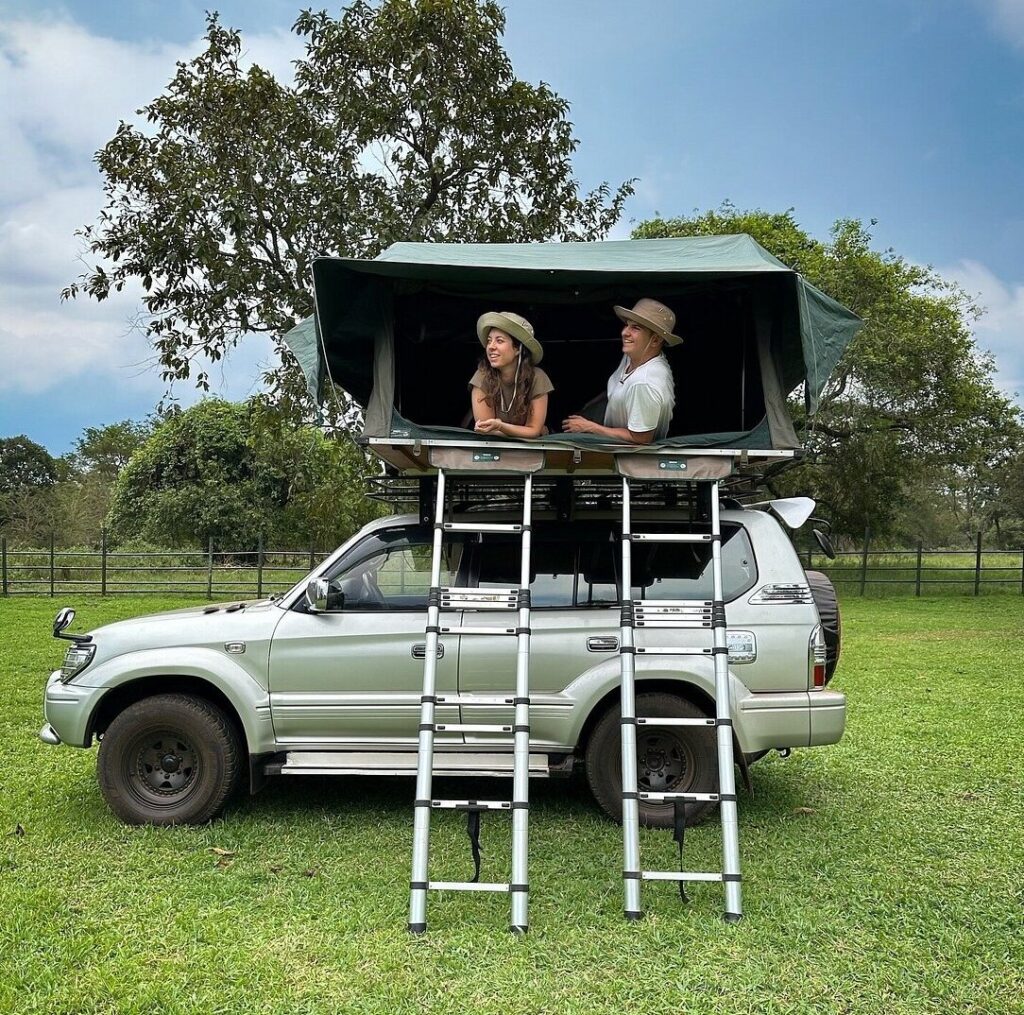
Early booking can also help you secure extras such as rooftop tents, camping equipment, spare tyres and additional drivers before they become unavailable.
Compare Rental Companies Before Booking
Do not accept the first quotation you receive.
Rental prices in Kenya can vary considerably between companies, but the cheapest advertised daily rate does not necessarily represent the best deal. One company may advertise a lower basic rate while charging separately for insurance, additional drivers, camping equipment, border crossings or unlimited mileage.
When comparing offers, look at the total rental cost rather than simply the daily rate.
Check whether the quotation includes:
- Comprehensive or basic insurance
- Collision damage waiver
- Insurance excess
- Unlimited or limited mileage
- Additional drivers
- Camping equipment
- Rooftop tent
- Spare tyres
- Recovery and roadside assistance
- Airport collection or delivery
- One-way rental fees
- Cross-border charges
- Park-access requirements
- Taxes and other mandatory fees
A slightly more expensive rental can ultimately be much cheaper if more services are included in the package.
Consider Picking Up Outside the Airport
Airport collection is convenient, but it can sometimes cost more than collecting your vehicle from a city office.
Rental companies operating at airports may have additional operating and concession costs, which can be reflected in the rental price. If you are staying in Nairobi before beginning your road trip, compare the price of collecting the vehicle in the city with the price of airport delivery.
For longer rentals, even a relatively small difference in the daily rate can add up.
However, do not automatically assume that airport pickup is more expensive. Ask the rental company for both options and compare the total cost, including the taxi or transfer required to reach a city depot.
Choose the Right Vehicle for Your Route
The most important consideration when renting a vehicle in Kenya is choosing a car that is appropriate for your itinerary.
A small economy car can be an excellent choice for driving around Nairobi and travelling between major towns on paved highways. However, if your itinerary includes national parks, reserves or remote rural areas, a suitable 4×4 is usually the better choice.
Safari destinations such as the Maasai Mara, Amboseli, Tsavo, Samburu and other wildlife areas can involve rough, muddy or corrugated roads. During rainy periods, some tracks can become particularly challenging.
For a serious self-drive safari, consider a vehicle with:
- High ground clearance
- Reliable 4WD
- Good tyres
- A full-size spare wheel
- Adequate luggage space
- Strong suspension
- Good fuel range
- Recovery equipment where appropriate
If you are travelling for several weeks, vehicle reliability becomes even more important. Saving a few dollars per day is not worthwhile if the vehicle is unsuitable for your route.
Don’t Choose a Vehicle Based Only on Price
A common mistake among self-drive travellers is choosing the cheapest available vehicle without checking whether it is permitted on their planned safari route.
Some rental vehicles are suitable for general road travel but may have restrictions on travel inside certain national parks or on specific roads.
Before paying a deposit, tell the rental company exactly where you intend to travel. Ask whether the vehicle is permitted in the parks and reserves on your itinerary and whether there are any restrictions on particular roads or tracks.
If you are planning a Kenya–Tanzania road trip, also confirm whether the rental company permits the vehicle to cross the international border and whether additional documentation or fees apply.
Check the Insurance Carefully
Insurance is one of the most important parts of a Kenya car rental agreement.
Never assume that the advertised rental price automatically means you have complete protection. Read the insurance section carefully and ask the rental company what is covered and what is excluded.
Pay particular attention to the insurance excess. A vehicle may have insurance coverage but still leave you responsible for a substantial amount if the car is damaged.
Ask about coverage for:
- Accidents
- Theft
- Windscreen damage
- Tyres
- Undercarriage damage
- Towing and recovery
- Single-vehicle accidents
- Driving on unpaved roads
- National park driving
- Water damage
- Cross-border travel
Most importantly, make sure your planned safari route is covered by the rental agreement and insurance policy.
Avoid Unnecessary Upfront Costs
Where possible, choose a rental company offering flexible booking and payment conditions.
Some suppliers require full payment months before the rental begins, while others allow you to reserve the vehicle with a deposit and pay the balance when you collect it.
A lower upfront payment can provide greater flexibility if your travel plans change.
Before booking, check the company’s cancellation and amendment policies. A slightly higher rental rate with flexible cancellation may be better value than a cheaper non-refundable reservation.
Consider the Length of Your Rental
The number of rental days can have a significant impact on your overall price.
Many rental companies offer discounted weekly or monthly rates, meaning the average daily price may decrease as the rental period becomes longer.
If you need a car for five or six days, ask for the seven-day rate as well. Similarly, if your trip is approaching a month, ask whether the company offers a long-term rental discount.
For travellers planning extended East African road trips, negotiating a weekly or monthly rate can sometimes produce considerable savings compared with paying the standard daily rate.
Pay Attention to Pickup and Drop-Off Times
Rental companies normally calculate rental periods according to 24-hour blocks, although policies differ between suppliers.
For example, collecting a vehicle at 2:00 p.m. may mean that the vehicle must be returned by 2:00 p.m. on the final rental day to avoid an additional day’s charge.
When making your reservation, use your actual arrival and departure times rather than automatically selecting the default times shown on a booking form.
Also ask about the company’s grace period for late returns. If you are delayed by traffic, a flight change or another unexpected problem, contacting the rental company in advance may help you avoid unnecessary charges.
Be Careful With Additional Drivers
If several people will drive the vehicle, check whether additional drivers are included in the rental price.
Some companies allow one or more additional drivers at no extra charge, while others apply a daily fee.
Make sure every person who will drive the vehicle is properly registered under the rental agreement and meets the company’s driving requirements.
This is particularly important on a self-drive safari because allowing an unregistered driver to operate the vehicle could create problems with insurance coverage following an accident.
Don’t Overpay for GPS and Other Extras
Modern smartphones can eliminate the need for some traditional rental extras.
Offline navigation applications can be useful when travelling through Kenya, particularly in areas where mobile network coverage is limited. Download your maps before leaving Nairobi or another major town.
However, do not rely exclusively on a phone. A power bank, vehicle charger and offline maps are useful backups.
If you are travelling with children, compare the cost of renting a child seat with bringing your own or purchasing one locally. Similarly, ask whether camping equipment, rooftop tents, tables, chairs and cooking equipment are included in the rental package if you are planning a camping safari.
Inspect the Vehicle Before You Leave
Before driving away from the rental depot, carefully inspect the entire vehicle.
Walk around the car with the rental representative and check for existing scratches, dents, cracked windows, damaged lights, tyre damage and other visible problems.
Take photographs and short videos of the vehicle from different angles. Make sure existing damage is recorded on the rental inspection form before you leave.
Also check the condition of:
- Tyres and spare tyre
- Windscreen
- Mirrors
- Lights
- Bumpers
- Body panels
- Roof and rooftop equipment
- Camping equipment
- Jack and wheel tools
This simple step can prevent disagreements when you return the vehicle.
Check the Fuel Policy
Fuel can become a significant part of the cost of a Kenya self-drive safari, especially when travelling long distances between parks.
Before collecting the vehicle, find out whether the rental company operates a full-to-full fuel policy or another arrangement.
A full-to-full policy is often straightforward: you collect the vehicle with a full tank and return it full.
For a safari vehicle, also ask about fuel tank capacity and expected fuel consumption. A vehicle with a larger fuel range can be particularly useful when travelling through remote safari areas where fuel stations are limited.
Understand Where You Are Allowed to Drive
Before signing the rental agreement, carefully read the geographical restrictions.
Some rental agreements may restrict driving outside major roads, travelling into certain national parks, crossing international borders or driving in particular remote areas.
If your itinerary includes the Maasai Mara, Amboseli, Tsavo, Samburu, Lake Turkana or other remote destinations, tell the rental company in advance.
For cross-border journeys, such as Kenya to Tanzania or Kenya to Uganda, ask about the required documentation, insurance, vehicle authorization and additional fees.
Never assume that an ordinary rental agreement automatically permits international travel.
Ask About One-Way Rental Fees
One-way rentals can be extremely convenient for travellers who do not want to return to their starting point.
For example, you may want to collect a vehicle in Nairobi and return it in Mombasa, or begin in Nairobi and continue into another destination.
However, one-way rentals can attract additional charges because the rental company must arrange for the vehicle to be returned to its original location.
Before booking, ask for the complete one-way fee rather than simply comparing the daily rental rate.
For longer journeys, the convenience of a one-way rental can still make it worthwhile.
Check Roadside Assistance and Recovery
A reliable rental vehicle is essential for a Kenya road trip, but it is equally important to know what happens if something goes wrong.
Ask whether your rental includes 24-hour roadside assistance and what happens in the event of a breakdown.
For a safari vehicle, find out whether recovery is available in national parks and remote areas or only on major highways.
A good rental agreement should clearly explain who you should contact in an emergency and whether towing or recovery costs are included.
Read the Rental Agreement Before Signing
Always read the rental agreement carefully before collecting the vehicle.
Look beyond the headline rental price and check the sections covering insurance, mileage, fuel, late returns, damage, deposits, geographical restrictions, park access and cross-border travel.
If something is unclear, ask the rental company to explain it before signing.
A professional rental company should be able to provide clear answers about the vehicle and rental conditions.
The Cheapest Kenya Car Rental Is Not Always the Best Deal
When comparing Kenya car rental companies, it is tempting to choose whichever supplier offers the lowest daily price.
However, the cheapest quotation can become expensive once insurance, excess charges, additional drivers, airport fees, camping equipment, mileage limits and one-way charges are added.
The best deal is usually the one that offers the right vehicle, clear insurance, transparent pricing and suitable support for your itinerary.
For a city holiday, a small vehicle may be perfectly adequate. For a Kenya self-drive safari, investing in a reliable 4×4 can make the journey safer, more comfortable and far more enjoyable.
Final Thoughts
Finding the best car rental deal in Kenya is about more than finding the lowest advertised price. Start by booking early, compare several suppliers and look carefully at what is included in each quotation.
Most importantly, choose a vehicle that matches your route. If you are planning to explore Kenya’s national parks and remote destinations, a properly equipped 4×4 is often worth the additional investment.
Before collecting the vehicle, confirm the insurance, geographical restrictions, fuel policy, mileage allowance, additional driver charges and roadside assistance arrangements. Inspect the vehicle carefully and document any existing damage before starting your journey.
With the right preparation, renting a car in Kenya can be an affordable and flexible way to experience the country’s cities, landscapes, coastlines and spectacular wildlife at your own pace.