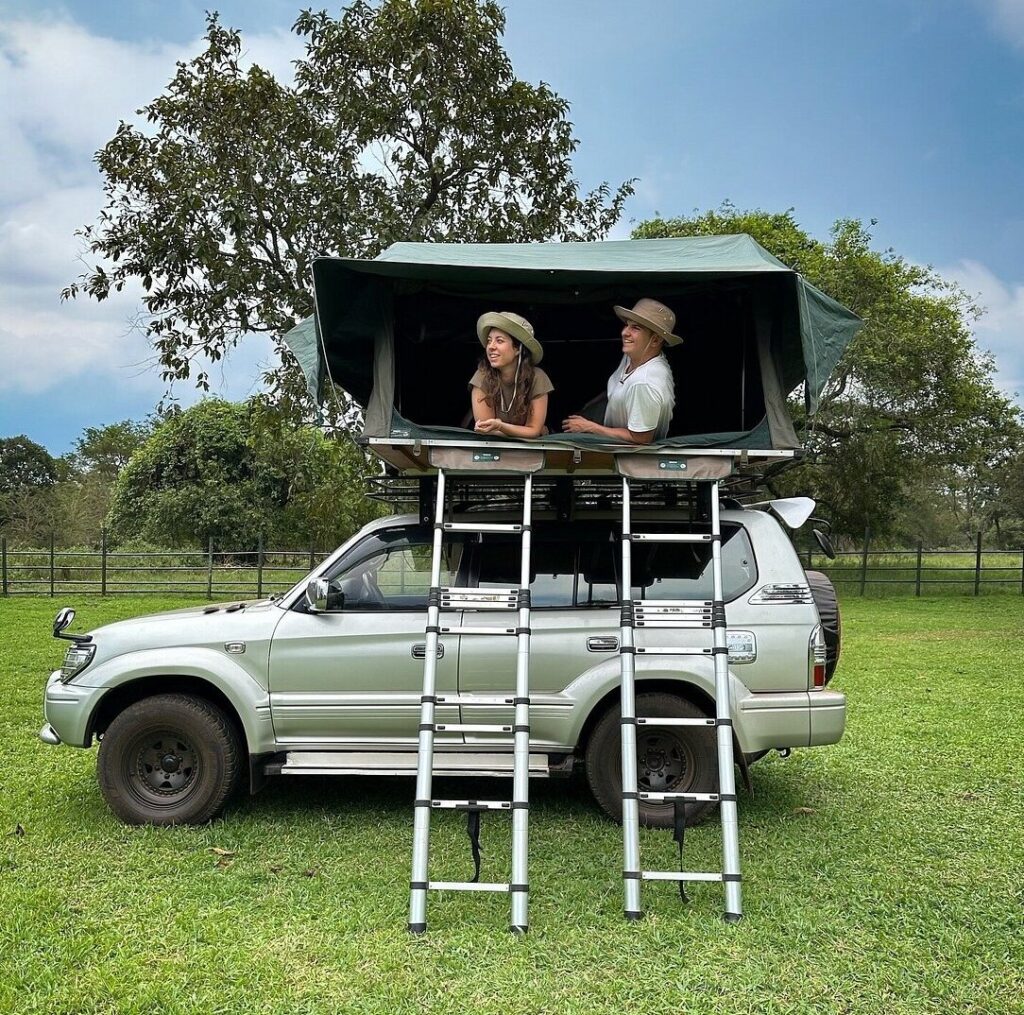
4×4 Kenya with Rooftop Tent – Self-Drive Kenya Safari
Kenya is one of Africa’s most exciting destinations for travellers who want the freedom to explore independently. From the open savannahs of the Maasai Mara to the elephant-filled plains of Amboseli, the dramatic landscapes of Tsavo and the beautiful highlands around Mount Kenya, a self-drive safari in Kenya allows you to experience the country at your own pace.
For travellers who want more than a conventional safari, renting a 4×4 Kenya vehicle with a rooftop tent provides an excellent way to combine transportation, accommodation and adventure. Instead of moving between lodges every night, you can travel with your own camping equipment, choose designated campsites along your route and wake up close to the landscapes you came to explore.
A properly equipped 4×4 is particularly useful when travelling through remote areas or during wetter periods, when some safari roads can become challenging. Kenya Wildlife Service notes that during the April–June long-rains period, many park roads may require four-wheel-drive vehicles.
What Is a Rooftop Tent 4×4 Safari?
A rooftop-tent safari involves renting a four-wheel-drive vehicle equipped with a tent mounted securely on the roof. At the end of the day’s drive, the tent can be unfolded and prepared for the night.
The setup gives independent travellers the opportunity to combine a road trip with camping without having to carry a conventional ground tent.
Depending on the rental package, a Kenya rooftop-tent 4×4 may be supplied with:
- 4×4 Toyota Land Cruiser, Land Cruiser Prado or similar vehicle
- Rooftop tent
- Comfortable camping mattress
- Sleeping bags or bedding
- Camping table and chairs
- Cooking equipment
- Plates, cups and utensils
- Gas cooker or camping stove
- Refrigerator or cooler
- Water containers
- Recovery equipment
- Spare tyre
- Basic camping equipment
Equipment varies between rental companies, so travellers should confirm exactly what is included before booking.
Why Choose Self-Drive Kenya?
A self-drive safari gives you considerably more independence than a traditional guided safari. You decide where to stop, how long to stay in a particular area and which routes to take.
You can spend extra time watching elephants in Amboseli, take a scenic drive through the Kenyan highlands or make a longer road trip connecting several national parks.
Kenya Wildlife Service currently lists numerous protected areas suitable for wildlife experiences, including Amboseli, Lake Nakuru, Tsavo East, Tsavo West, Nairobi National Park, Meru and Aberdare among others.
The freedom of self-drive is especially attractive to photographers, couples, families, experienced road trippers and travellers who prefer flexible itineraries.
The Best 4×4 Vehicles for Kenya Self-Drive
A suitable vehicle is one of the most important parts of a successful Kenya self-drive safari.
Toyota Land Cruiser
The Toyota Land Cruiser is widely used for African safari travel because of its ground clearance, four-wheel-drive capability and suitability for rough roads.
A Land Cruiser equipped with a rooftop tent is particularly suitable for longer camping journeys where travellers expect to encounter gravel roads, muddy sections, uneven tracks and remote areas.
Toyota Land Cruiser Prado
A Prado provides a balance between comfort and off-road capability. It can be an attractive option for couples, families or small groups who want a comfortable vehicle while retaining four-wheel-drive capability.
Toyota Hilux
A Toyota Hilux can also be suitable for travellers who want a rugged vehicle for an extended road trip. Depending on the configuration, camping equipment can be carried in the vehicle or mounted as part of the rental setup.
The most appropriate vehicle depends on the number of travellers, luggage, camping equipment, route and expected road conditions.
Popular Self-Drive Kenya Safari Routes
Kenya offers numerous possibilities for an independent 4×4 adventure.
Nairobi – Amboseli – Tsavo – Mombasa
This is one of the most attractive routes for travellers combining wildlife, landscapes and the Kenyan coast.
A possible itinerary is:
Nairobi → Amboseli National Park → Tsavo West → Tsavo East → Mombasa
Amboseli is famous for its views toward Mount Kilimanjaro and large elephant populations. From Amboseli, travellers can continue towards Tsavo West and Tsavo East before finishing on the coast.
Camping along the route allows you to experience very different environments during one journey.
Nairobi – Lake Naivasha – Lake Nakuru – Maasai Mara
Another popular northern safari circuit can combine:
Nairobi → Lake Naivasha → Lake Nakuru → Maasai Mara
The route offers a mixture of lakes, escarpments, wildlife areas and the famous Mara ecosystem.
Lake Nakuru and other KWS-managed parks have designated camping accommodation, while other parts of the journey can include privately operated campsites. KWS confirms that its parks and reserves offer public and special campsites as well as privately operated accommodation.
Nairobi – Samburu – Laikipia – Mount Kenya
For travellers looking beyond the classic southern safari circuit, northern Kenya provides a very different experience.
A road trip can include:
Nairobi → Ol Pejeta/Laikipia → Samburu → Isiolo → Mount Kenya
This route combines wildlife, mountain scenery, semi-arid landscapes and cultural experiences.
Kenya – Tanzania Cross-Border Self-Drive
Experienced travellers can also consider a longer East African road trip connecting Kenya and Tanzania.
Possible routes include:
Nairobi → Amboseli → Arusha → Tarangire → Ngorongoro → Serengeti
or:
Nairobi → Maasai Mara → Serengeti → Ngorongoro → Arusha
Cross-border rentals require additional planning because vehicle documentation, insurance, border requirements and rental-company permissions must be arranged in advance.
Camping with a Rooftop Tent in Kenya
One of the biggest attractions of rooftop-tent travel is the ability to spend nights close to nature.
Kenya Wildlife Service operates public and special campsites in its protected areas. Public campsites generally provide basic facilities, while special campsites can offer a more private camping experience and may require visitors to be self-sufficient with tents, food, cooking equipment and supplies.
A rooftop tent therefore works particularly well for travellers who want a flexible camping setup.
However, you should always use designated camping areas and follow the rules of the park or reserve you are visiting.
What Should You Carry on a Kenya Camping Safari?
A well-planned self-drive safari should include more than just the vehicle and tent.
Consider carrying:
- Drinking water
- Food and cooking supplies
- Camping stove
- Cooking utensils
- Headlamps or torches
- Power banks
- Camera and binoculars
- Insect repellent
- Sunscreen
- First-aid kit
- Warm clothing
- Rain jacket
- Personal toiletries
- Spare tyre and tyre-repair equipment
- Recovery equipment
- Navigation equipment
- Basic vehicle tools
KWS also advises visitors to carry personal effects, drinking water, food and camping gear when visiting parks where these supplies may be required.
Driving a 4×4 in Kenya’s National Parks
Driving inside a Kenyan national park is different from driving on public roads.
Wildlife has priority, and drivers should maintain a safe distance from animals and remain on authorised roads and tracks.
KWS safety guidance includes a maximum speed limit of 40 km/h in its parks, staying on established roads and trails, remaining inside the vehicle except in designated areas and avoiding unnecessary noise.
Travellers should also check the current rules of each individual park before entering because regulations, fees, opening arrangements and camping availability can vary.
Self-Drive Maasai Mara
The Maasai Mara is one of Kenya’s best-known safari destinations and is a major attraction for self-drive travellers.
A 4×4 is particularly useful because safari tracks can become difficult after rain.
When driving in the Mara ecosystem, travellers should:
- Drive slowly around wildlife
- Avoid approaching animals too closely
- Remain inside the vehicle in wildlife areas
- Follow designated tracks
- Avoid off-road driving where prohibited
- Carry sufficient water
- Allow plenty of time for navigation
- Use a reliable 4×4
The Great Migration period can also attract large numbers of visitors, making advance planning particularly important.
Self-Drive Amboseli
Amboseli is an excellent destination for a rooftop-tent road trip.
The park is particularly known for its elephant sightings and dramatic views of Mount Kilimanjaro.
A rooftop tent allows travellers to combine a wildlife experience with an authentic camping adventure rather than staying exclusively in lodges.
The surrounding area also provides opportunities to experience Maasai culture and the wider ecosystem beyond the park itself.
Self-Drive Tsavo
Tsavo is particularly attractive for travellers who enjoy long-distance 4×4 adventures.
Tsavo East and Tsavo West cover extensive landscapes and provide opportunities to encounter elephants, lions, buffalo, giraffes and many other species.
The scale of Tsavo makes a capable vehicle and good preparation especially important.
A rooftop-tent 4×4 gives travellers the flexibility to spend several nights exploring the area rather than treating the park as a short stopover.
Self-Drive Lake Nakuru
Lake Nakuru provides a very different landscape from the open savannahs of Amboseli and Tsavo.
The area is known for its birdlife, scenic surroundings and wildlife.
It can easily be incorporated into a longer self-drive itinerary connecting Nairobi, the Great Rift Valley and the Maasai Mara.
For travellers carrying camping equipment, the availability of designated campsites makes it possible to include camping as part of the journey. KWS lists camping and other accommodation options within its parks and reserves.
When Is the Best Time for a Kenya Rooftop-Tent Safari?
Kenya can be visited throughout the year, although weather conditions affect road conditions and camping comfort.
KWS identifies July–December and December–March as periods generally associated with favourable wildlife-viewing conditions, while April–June corresponds with the long-rains period. KWS also notes that some park roads may require 4WD during the rains.
For a rooftop-tent safari, weather is particularly important because your accommodation is exposed to outdoor conditions.
Before travelling, check the forecast for the specific regions on your route and be prepared for changing conditions.
How Much Does a Kenya 4×4 Rooftop Tent Rental Cost?
The price depends on the vehicle, rental duration, camping equipment, insurance, season, pickup and drop-off locations and whether the vehicle can cross international borders.
Typical rental quotations may be structured around:
| Rental Component | What to Check |
|---|---|
| 4×4 vehicle | Model, age and transmission |
| Rooftop tent | Tent capacity and mattress |
| Camping equipment | Cooking and sleeping equipment |
| Insurance | Included cover and excess |
| Mileage | Unlimited or restricted |
| Recovery equipment | Included or optional |
| Additional driver | Cost and conditions |
| Cross-border use | Permission and additional charges |
| One-way rental | Drop-off fees |
| Park fees | Paid separately |
| Camping fees | Paid separately |
Always request a complete quotation before confirming your booking so you understand exactly what is included.
What Makes a Good Kenya Self-Drive Rental?
A good rental vehicle should be properly maintained and equipped for the route you intend to travel.
Before departure, inspect:
- Tyres
- Spare tyre
- Brakes
- Lights
- Battery
- Suspension
- Four-wheel-drive system
- Jack and wheel tools
- Recovery equipment
- Camping equipment
- Rooftop tent
- Cooking equipment
- Refrigerator or cooler
- Water storage
You should also receive a clear explanation of how to operate the vehicle and camping equipment before leaving the rental office.
Kenya Self-Drive Safety Tips
Self-drive safari is rewarding, but travellers should take wildlife and road conditions seriously.
Never approach wild animals on foot simply because they appear calm. Inside national parks, remain inside the vehicle except in designated areas.
Avoid driving after dark in wildlife areas unless specifically permitted.
Keep food properly stored and maintain a clean campsite.
Follow park instructions, speed limits and designated routes. KWS specifically advises visitors to remain on established roads and trails and prohibits off-road driving in its parks.
Is a Rooftop Tent Safe in Kenya?
A rooftop tent is designed to elevate the sleeping area above ground level, but it should not be treated as protection from wildlife.
The most important consideration is choosing an authorised campsite and following local and park safety instructions.
Never camp wherever you choose simply because a location looks attractive.
Use designated campsites and follow instructions from campsite staff, park authorities and your rental company.
Kenya Self-Drive for Couples
A rooftop-tent 4×4 is particularly appealing to couples who want a private road-trip experience.
Two people can travel relatively light, set up camp quickly and build an itinerary around wildlife, landscapes and photography.
A couple might combine:
Nairobi → Lake Naivasha → Lake Nakuru → Maasai Mara → Amboseli → Tsavo → Mombasa
The exact route should be adjusted according to available time, road conditions and park access.
Kenya Self-Drive for Families
Families can also enjoy a rooftop-tent safari, although vehicle size and sleeping arrangements need careful consideration.
For families, check:
- Number of sleeping places
- Child-friendly camping arrangements
- Luggage capacity
- Refrigerator capacity
- Cooking equipment
- Vehicle safety features
- Distance between destinations
- Availability of campsites
- Park rules concerning children
A larger 4×4 may be preferable for families travelling with substantial camping equipment.
Why Book a 4×4 Rooftop Tent in Kenya?
A rooftop-tent 4×4 combines several elements of an African adventure into one package.
You have your own vehicle, your own sleeping accommodation and the freedom to travel independently.
Instead of following a fixed guided itinerary, you can create a journey that matches your interests.
You might spend several days photographing elephants, take a scenic drive through the Rift Valley, camp beneath the stars or continue towards the Kenyan coast.
That freedom is the essence of self-drive Kenya.
Plan Your Kenya 4×4 Rooftop Tent Adventure
If you are planning a Kenya self-drive safari with a rooftop tent, choose a vehicle that matches your route, group size and camping requirements.
A properly equipped 4×4 can take you from Nairobi into some of Kenya’s most spectacular landscapes, while a rooftop tent gives you the flexibility to turn the road trip itself into part of the safari experience.
From Maasai Mara and Lake Nakuru to Amboseli and Tsavo, Kenya offers a wide range of landscapes and wildlife experiences for independent travellers.
Whether you are planning a short safari or a multi-week East African road trip, a 4×4 rental with rooftop tent in Kenya gives you the freedom to explore at your own pace.
Frequently Asked Questions
Can I do a self-drive safari in Kenya?
Yes. Kenya has numerous protected areas where visitors can experience wildlife on self-guided or self-drive trips, subject to the rules of the individual park or reserve. KWS specifically describes wildlife viewing through both guided and self-guided experiences.
Do I need a 4×4 for Kenya?
Not for every road in Kenya, but a 4×4 is particularly useful for safari routes and challenging road conditions. KWS notes that some park roads may require four-wheel drive during the April–June rains.
Can I camp inside Kenyan national parks?
Yes, designated public and special campsites are available in KWS-managed parks and reserves, although availability and requirements vary by location.
Can I rent a 4×4 with a rooftop tent in Kenya?
Yes. Specialist safari rental companies offer 4×4 vehicles equipped with rooftop tents and camping equipment. The exact vehicle and equipment package depends on the rental company.
Can I drive from Kenya to Tanzania with a rental 4×4?
Some rental companies allow cross-border travel, but this must be arranged in advance. Additional documentation, insurance and border requirements may apply.
What should I bring for a rooftop-tent safari?
Carry suitable clothing, drinking water, food, camping equipment, personal medication, insect repellent, sunscreen, a first-aid kit, navigation equipment and appropriate vehicle recovery equipment.
Is Kenya suitable for a long self-drive road trip?
Yes. Kenya can be combined into extended routes covering wildlife areas, highlands, lakes, northern Kenya and the coast. Longer journeys require careful planning of fuel, accommodation, vehicle maintenance, road conditions and park access.
Can I combine Kenya and Tanzania in one safari?
Yes, depending on the rental company’s cross-border policy. Kenya and Tanzania can be combined into a longer East African self-drive adventure covering destinations such as Maasai Mara, Amboseli, Arusha, Ngorongoro and Serengeti.