3-Day Kenya Primate Safari: Colobus Monkeys, Baboons and Forest Wildlife
Introduction: Discover Kenya’s Fascinating Primates in Three Days
A 3-day Kenya primate safari is an excellent opportunity to discover the country’s fascinating monkeys, forest habitats, and diverse wildlife. While Kenya is internationally known for its elephants, lions, giraffes, and the Great Migration, it is also home to a variety of primates living in coastal forests, mountain forests, savannah woodlands, and protected conservation areas.
Travelers can encounter black-and-white colobus monkeys, Sykes’ monkeys, vervet monkeys, olive baboons, and other species depending on the destination. These experiences provide an interesting alternative to traditional wildlife safaris and can be combined with nature walks, birdwatching, coastal excursions, and cultural visits.
For independent travelers, a self-drive safari in Kenya offers the flexibility to explore different habitats at their own pace. A three-day trip can focus on the coastal forests near Diani, the wildlife-rich landscapes around Mount Kenya, or the forest environments of central Kenya.
Unlike Rwanda and Uganda, Kenya does not offer a standard mountain gorilla trekking experience because mountain gorillas do not occur naturally in the country. However, Kenya provides rewarding opportunities to observe several other primate species in their natural environments.
Which Primates Can You See in Kenya?
Kenya supports a diverse range of primates, from forest-dwelling colobus monkeys to baboons that live in woodland and savannah habitats.
Black-and-White Colobus Monkeys in Kenya
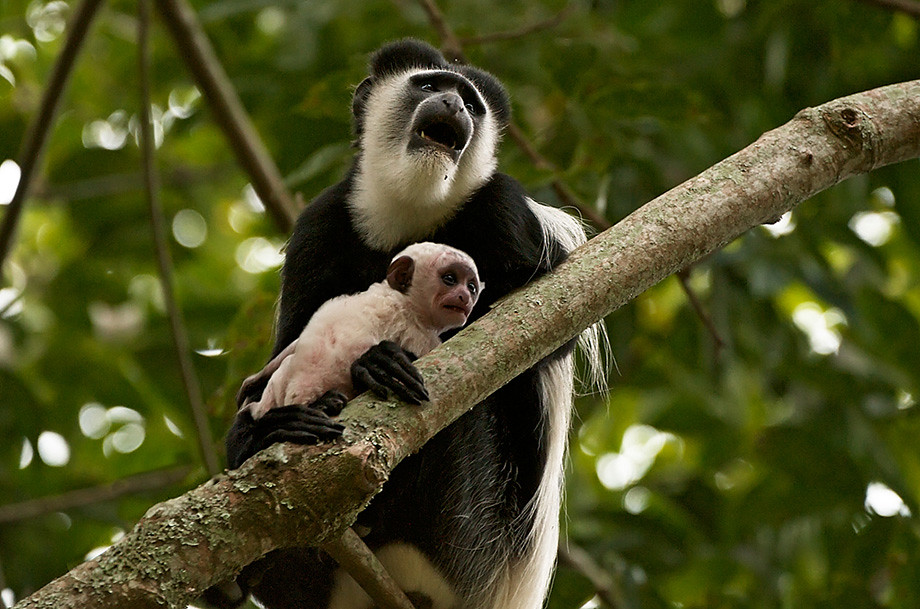
Black-and-white colobus monkeys are among Kenya’s most distinctive primates. They have striking black fur, long white mantle hair, and bushy tails. These monkeys spend much of their time in trees, feeding primarily on leaves and other plant material.
Coastal forests around Diani and protected forest areas in central Kenya provide opportunities to learn about colobus monkeys and their habitats.
The Colobus Conservation organization near Diani works to protect primates and their forest environments. Visitors can learn about conservation initiatives and the challenges facing wildlife in areas where forests meet human settlements.
Sykes’ Monkeys and Vervet Monkeys
Sykes’ monkeys and vervet monkeys can be encountered in suitable forest, woodland, and coastal habitats in Kenya. They are active, social primates that feed on a variety of plant material, fruits, and other food sources.
Their distribution varies by region, so the best destination depends on which species you hope to observe.
Travelers should maintain a respectful distance, avoid feeding wild monkeys, and follow guidance from conservation staff and local authorities.
Olive Baboons
Olive baboons are among the most adaptable primates in East Africa. They live in a variety of habitats, including savannah, woodland, rocky landscapes, and forest edges.
They are frequently seen during wildlife safaris in Kenya, including in national parks and reserves where baboons share the landscape with larger mammals.
Baboons are intelligent and opportunistic animals. Visitors should keep food securely stored, avoid approaching them, and never attempt to feed them.
Other Forest Wildlife
Kenya’s forest habitats also support a variety of birds, small mammals, reptiles, and other wildlife. Depending on your destination, a primate-focused trip can include nature walks, forest interpretation, birdwatching, and visits to conservation projects.
For travelers interested in the wider biodiversity of East Africa, a Kenya primate safari can also be combined with a longer self-drive safari in East Africa.
Recommended 3-Day Kenya Primate Safari: Diani and the Coastal Forests
This itinerary focuses on Kenya’s southern coast, where travelers can combine colobus monkey conservation, forest exploration, and coastal scenery. It is particularly suitable for visitors staying in Diani Beach or arriving through the Mombasa region.
Day 1: Arrive in Diani and Explore the Coastal Forests
Begin your trip in Diani Beach, one of Kenya’s best-known coastal destinations. After collecting your rental vehicle or arranging local transport, settle into your accommodation and explore the surrounding area.
Visit Colobus Conservation near Diani to learn about primate protection, forest conservation, and efforts to reduce conflict between wildlife and people. Depending on the organization’s current visitor arrangements, you may be able to learn about its conservation work and the local primates it helps protect.
Spend the remainder of the day exploring the coastal environment, relaxing on the beach, or visiting nearby natural attractions.
Diani provides an excellent starting point for travelers who want to combine wildlife education with a coastal holiday.
Accommodation: Diani Beach.
Main activities: Colobus conservation, coastal scenery, and nature exploration.
Day 2: Forest Exploration and Primate Observation
Spend the second day exploring suitable forest habitats and conservation attractions around the southern Kenyan coast.
Depending on current access arrangements, you may visit Kaya Kinondo Sacred Forest, where guided visits can introduce travelers to coastal forest ecology and the cultural importance of sacred forest landscapes.
Keep an eye out for monkeys and other wildlife during approved visits, but remember that sightings are never guaranteed. Some primates are more active at particular times of day, and their movements depend on weather, food availability, and human activity.
A guided visit can help you understand how forest fragmentation, development, and human-wildlife interactions affect primates in coastal Kenya.
Return to Diani in the afternoon and enjoy the beach or local dining options.
Accommodation: Diani Beach.
Main activities: Forest ecology, guided nature experiences, and primate observation where available.
Day 3: Explore the Coast and Continue Your Journey
After breakfast, enjoy a final morning exploring Diani and the surrounding coastal region.
Depending on your onward plans, you can visit another nature attraction, take a coastal excursion, or begin driving toward Mombasa for your next destination.
If you are continuing on a wider Kenyan road trip, you can plan a longer route that includes Tsavo National Parks and other wildlife destinations suitable for your schedule.
Before departure, confirm road conditions, driving times, and any required entry arrangements for the places you intend to visit.
Main activities: Coastal exploration, optional nature visits, and onward travel.
Alternative 3-Day Kenya Primate and Forest Safari
Travelers who prefer mountain scenery and central Kenyan forests can consider a different itinerary based around the Mount Kenya region.
Day 1: Nairobi to the Mount Kenya Region
Depart Nairobi and travel north toward the Mount Kenya region. The drive takes several hours depending on your destination, traffic, and road conditions.
Enjoy views of rural landscapes, agricultural areas, and the foothills surrounding Mount Kenya. Arrive at your accommodation and prepare for the next day’s nature activities.
Day 2: Forest Wildlife and Primate Observation
Explore an appropriate forest reserve or conservation area with authorized guides, subject to access rules and current availability.
The forests and forest edges in central Kenya support a variety of wildlife, and some areas provide opportunities to see monkeys and baboons. Sightings depend on the specific location and conditions.
You can also include birdwatching, guided nature walks, or scenic excursions around the mountain region.
Day 3: Return to Nairobi
After breakfast, enjoy the surrounding countryside before returning to Nairobi or continuing to another Kenyan destination.
This itinerary is suitable for travelers who want a forest and nature experience rather than a beach-focused holiday. Choose your exact forest destination before booking accommodation, as primate species and access arrangements differ from one area to another.
How Much Does a 3-Day Kenya Primate Safari Cost?
The cost of a three-day Kenya primate safari depends on your destination, accommodation, transport, activities, and the number of travelers.
Unlike mountain gorilla trekking in Rwanda and Uganda, Kenya’s primate experiences generally do not revolve around one high-priced gorilla permit. Some conservation attractions may charge admission or guided-visit fees, while others operate under national park, forest reserve, or community-based entry arrangements.
Use the following table as a planning guide rather than a confirmed quotation.
| Safari expense | What to budget for |
|---|---|
| Vehicle rental | Daily rental rate for your chosen vehicle |
| Fuel | Depends on the route and vehicle |
| Accommodation | Two nights in a hotel, lodge, or guesthouse |
| Conservation visits | Entry or guided-tour fees where applicable |
| Meals and drinks | Based on your preferred dining style |
| Park or reserve fees | Applicable charges for the destinations visited |
| Additional activities | Guided walks, cultural visits, or coastal excursions |
To obtain an accurate cost, confirm the exact attractions you plan to visit and check their current visitor charges. National park and reserve fees are separate from vehicle rental and accommodation unless a package specifically includes them.
Self-Drive Kenya Primate Safari
A self-drive safari in Kenya is a practical way to explore Kenya’s coastal forests, countryside, and wildlife destinations. Renting a vehicle gives you greater control over your schedule and makes it easier to combine primate experiences with beaches, national parks, and scenic road trips.
For a coastal itinerary around Diani, a standard rental vehicle may be suitable for many paved roads, depending on your destinations and current conditions. For more remote areas, rough roads, or a wider safari route, a suitable 4×4 car rental in Kenya may provide additional comfort and capability.
Before starting your trip, check that your rental agreement allows travel to your chosen destinations. Review insurance coverage, breakdown assistance, fuel arrangements, and any restrictions affecting national parks or forest reserves.
Remember that a self-drive vehicle does not automatically provide access to restricted conservation areas. Follow the rules of each site, use authorized guides where required, and never approach or feed wild primates.
Travelers planning a larger adventure can explore our 4×4 car rental in Kenya options or use a Kenya self-drive safari itinerary to plan a longer wildlife journey.
Best Time for a Kenya Primate Safari
Kenya’s climate varies considerably between the coast, central highlands, mountains, and inland wildlife areas.
The coastal region is generally warm throughout the year, while forest and mountain areas can be cooler and wetter. Rainfall may affect trail conditions, road access, and wildlife viewing.
For a coastal primate trip, choose travel dates that suit your wider beach holiday and confirm whether conservation attractions are open to visitors. For forest destinations, check local weather and trail conditions before departure.
Pack comfortable walking shoes, lightweight clothing, sun protection, insect repellent, and a waterproof layer. If your itinerary includes a mountain or highland forest, bring warmer clothing for early mornings and cooler evenings.
What to Pack for a Three-Day Kenya Primate Safari
Prepare the following essentials for your trip:
- Comfortable walking shoes or hiking boots.
- Lightweight, breathable clothing.
- A hat, sunglasses, and sunscreen.
- Insect repellent.
- A reusable water bottle.
- A small daypack.
- A camera or phone for wildlife photography.
- Binoculars for observing animals at a distance.
- A light rain jacket.
- Your identification and relevant booking confirmations.
Follow local conservation guidance throughout your visit. Keep a safe distance from wildlife and avoid carrying exposed food around monkeys and baboons.
Frequently Asked Questions About Kenya Primate Safaris
Is three days enough for a Kenya primate safari?
Yes. Three days can provide a rewarding introduction to Kenya’s primates, particularly if you focus on one region such as Diani and the southern coast. Choose a realistic itinerary rather than attempting to cover distant destinations in a short period.
Can I see mountain gorillas in Kenya?
No. Mountain gorillas do not occur naturally in Kenya. Travelers hoping to see mountain gorillas should consider gorilla trekking in Rwanda or Uganda, where authorized gorilla trekking experiences are available.
Where can I see colobus monkeys in Kenya?
The coastal region around Diani is known for black-and-white colobus monkeys and conservation initiatives focused on protecting them. Sightings in the wild are not guaranteed, and access to conservation facilities should be confirmed in advance.
Can I see chimpanzees in Kenya?
Kenya is not a standard destination for wild chimpanzee trekking. Travelers interested in chimpanzees in their natural habitat should consider established tracking destinations in Uganda or Rwanda, subject to current access arrangements.
Can I do a Kenya primate safari without a driver?
Yes. You can rent a vehicle and drive between suitable destinations independently, provided you follow Kenyan traffic regulations and your rental agreement. Guided activities may still be required at specific forest reserves or conservation sites.
Are monkeys and baboons dangerous?
Wild primates should always be treated as wild animals. Avoid feeding them, approaching them closely, or displaying food. Follow the instructions of guides and conservation staff, especially in areas where animals are accustomed to people.
Can I combine a primate safari with a traditional wildlife safari?
Yes. You can combine coastal primate conservation with a longer Kenya wildlife safari that includes national parks and reserves. Allow additional days for long-distance drives and confirm the most suitable vehicle for your planned route.
Book Your 3-Day Kenya Primate Safari
Discover Kenya beyond its famous savannahs with a short adventure focused on colobus monkeys, baboons, forest wildlife, and conservation experiences.
Whether you choose the coastal forests around Diani or the forest landscapes of central Kenya, a well-planned itinerary can combine wildlife observation, nature exploration, and independent road travel.
Contact our team to discuss vehicle rental, accommodation options, and a self-drive itinerary tailored to your interests and travel dates.