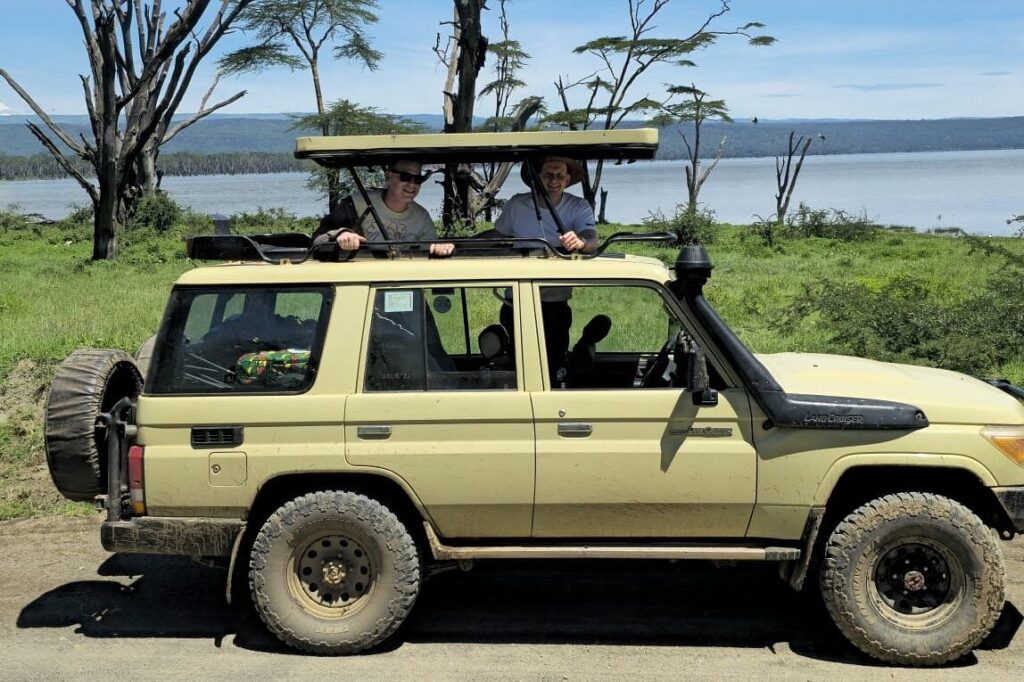
Tips for Getting the Best Car Rental Deals in Kenya
Kenya is one of Africa’s best destinations for exploring by road. From the energetic streets of Nairobi to the open plains of the Maasai Mara, the dramatic landscapes of Amboseli, the wilderness of Tsavo, and the remote northern regions around Samburu and Laikipia, travelling by rental car gives you the freedom to experience Kenya at your own pace.
For travellers planning a Kenya self-drive safari, however, finding the right rental vehicle at the best price requires more than simply choosing the cheapest quotation.
A good car rental deal should combine a reliable vehicle, transparent rental conditions, appropriate insurance, reasonable mileage terms, and the right equipment for your journey. Whether you are planning a short Kenya road trip, a family holiday, a wildlife safari, or an extended East African adventure, the following tips can help you save money while choosing a vehicle that is suitable for your itinerary.
1. Book Your Kenya Rental Car Early
Booking your rental car in advance can help you secure better rates and a wider choice of vehicles.
Demand for rental cars often increases during popular travel periods, including Christmas and New Year, Easter, July and August, and other peak safari seasons. During busy periods, suitable 4×4 safari vehicles can become limited, particularly in Nairobi and other major tourist centres.
Early booking gives you a better chance of securing:
- A reliable Toyota Land Cruiser or similar 4×4
- A vehicle with a rooftop tent
- Automatic or manual transmission
- Extra camping equipment
- Your preferred pickup location
- Competitive rental rates
- Flexible rental dates
This is particularly important for self-drive safaris because properly equipped 4×4 vehicles are more limited than ordinary city cars.
2. Compare the Complete Rental Package
Do not choose a Kenya car rental company based only on its advertised daily rate.
A vehicle advertised at a low price may have additional charges for insurance, mileage, extra drivers, camping equipment, border crossings, vehicle recovery, or airport delivery.
When comparing quotations, check the complete package and ask what is included.
Important items to compare include:
- Daily rental rate
- Insurance and excess
- Mileage allowance
- Additional driver charges
- Airport pickup fees
- One-way rental charges
- Cross-border permits
- Rooftop tent
- Camping equipment
- Spare tyres
- Recovery services
- Taxes and mandatory fees
A slightly more expensive quotation can sometimes represent much better value when more services and equipment are included.
3. Compare Airport and City Pickup
Many travellers automatically choose Jomo Kenyatta International Airport pickup because it is convenient. However, it is worth comparing airport and city pickup prices.
Some rental companies apply additional airport-related charges, while others offer delivery to the airport for a reasonable fee.
If you are staying in Nairobi before starting your safari, collecting the vehicle from a city location may sometimes be more economical.
However, convenience is also important. If your safari starts immediately after landing, airport pickup may save you time and the cost of arranging separate transportation.
Always compare the total cost rather than assuming one option is automatically cheaper.
4. Choose the Right Vehicle for Your Safari
Kenya has excellent paved highways between major towns, but conditions can change dramatically once you enter national parks, conservancies, rural areas, or remote northern regions.
A small car may be perfectly adequate for travelling around Nairobi and other major towns. For a safari, however, a 4×4 vehicle is strongly recommended.
A capable safari 4×4 provides:
- Better ground clearance
- Improved traction on rough roads
- Greater comfort on long journeys
- Better capability on muddy or uneven tracks
- Greater confidence in remote areas
- Improved access to safari areas
For many Kenya self-drive safaris, a Toyota Land Cruiser 76, 78 or 79 Series, or a comparable 4×4, can be a practical choice.
Choosing the right vehicle for your route is more important than simply selecting the cheapest rental car.
5. Consider Fuel Consumption
Fuel is another important part of your Kenya road-trip budget.
A large 4×4 normally consumes more fuel than a small SUV, but fuel economy should not be considered separately from vehicle capability.
A vehicle that is inexpensive to rent but unsuitable for rough safari roads could result in additional problems and expenses.
When estimating your total budget, consider:
Rental price + fuel + insurance + park-related driving requirements + equipment + possible additional fees.
For a long safari, a reliable and well-maintained diesel 4×4 can often provide a practical balance between fuel consumption, durability, and performance.
6. Look for Flexible Payment and Cancellation Conditions
Before paying for your Kenya rental vehicle, check the company’s payment and cancellation policy.
A booking that requires only a deposit can provide more flexibility than one requiring full payment months in advance.
Check:
- Deposit requirements
- Balance payment deadline
- Cancellation policy
- Refund conditions
- Date-change policy
- Security deposit
- Accepted payment methods
Make sure you understand exactly what happens if your flight, safari dates, or itinerary changes.
7. Inspect the Vehicle Before Departure
Before leaving Nairobi or your pickup location, inspect the vehicle carefully with the rental representative.
Walk around the entire vehicle and check for existing damage, including:
- Scratches
- Dents
- Cracked windows
- Damaged lights
- Mirrors
- Bumpers
- Wheels
- Tyres
- Roof
- Interior equipment
Take photographs and short videos from different angles and make sure existing damage is recorded on the inspection form.
For a safari vehicle, also check the condition of the spare tyres, jack, recovery equipment, tools, and camping equipment if these are included.
A careful inspection can help prevent disputes when the vehicle is returned.
8. Check Weekly and Long-Term Rental Rates
Do not assume that renting for exactly the number of days you need will always give you the lowest price.
Ask the rental company whether it offers weekly or long-term discounts.
For example, if you require a vehicle for six days, ask for the seven-day rate as well. The additional day may provide better overall value if the company offers discounted weekly pricing.
Long-term discounts can be particularly attractive for travellers planning extended Kenya and East Africa road trips.
9. Plan Your Pickup and Drop-Off Times Carefully
Rental companies may calculate charges using 24-hour rental periods, calendar days, or their own specific policies.
Make sure your booking reflects your actual flight and travel schedule.
If your flight arrives in Nairobi in the afternoon, there may be little benefit in booking the vehicle from early morning.
Likewise, returning the vehicle late can result in additional charges.
If you expect a flight delay or changes to your itinerary, contact the rental company as soon as possible.
10. Avoid Unnecessary Extras
Additional equipment can increase your rental costs significantly.
Depending on the company and vehicle, you may be offered:
- GPS navigation
- Child seats
- Camping chairs
- Camping tables
- Fridge or cooler
- Camping mattresses
- Sleeping bags
- Cooking equipment
- Extra camping gear
Some equipment is essential for a camping safari, while other extras may not be necessary.
For navigation, offline smartphone maps can often be used instead of paying for a separate GPS device. Download your maps before entering remote areas where mobile coverage may be limited.
11. Check Where You Are Allowed to Drive
This is one of the most important considerations when renting a vehicle for a Kenya self-drive safari.
Do not assume that every rental vehicle can be driven anywhere in Kenya.
Before booking, confirm whether your rental agreement permits travel to your intended destinations, including:
- Maasai Mara
- Amboseli National Park
- Tsavo East and Tsavo West
- Samburu
- Laikipia
- Lake Nakuru
- Lake Naivasha
- Northern Kenya
- Remote conservancies
- Border areas
Also ask about restrictions on off-road driving and driving after dark.
Some rental agreements may prohibit driving outside designated roads or tracks, while others may have specific conditions for national parks and conservancies.
12. Check Insurance and Excess
Insurance is an essential part of choosing a Kenya rental vehicle.
A low daily rental price can become expensive if the insurance excess is very high or important forms of damage are excluded.
Before booking, ask:
- What insurance is included?
- What is the accident excess?
- Is theft covered?
- Are tyres covered?
- Are windscreens covered?
- Is underbody damage covered?
- Is damage on gravel or rough roads covered?
- Is recovery included?
- Can the excess be reduced?
Always ask about insurance exclusions, especially when planning to drive in national parks and remote areas.
13. Check the Mileage Policy
Some Kenya rental companies offer unlimited mileage, while others provide a daily or total mileage allowance.
This can make a major difference on a safari.
A typical Kenya self-drive itinerary may cover hundreds or thousands of kilometres when combining Nairobi, Maasai Mara, Lake Nakuru, Amboseli, Tsavo, Samburu, or the Kenyan coast.
If you expect to drive long distances, unlimited mileage can provide excellent value and remove the need to calculate every kilometre.
If mileage is restricted, ask how much additional kilometres will cost.
14. Consider a One-Way Rental
A one-way rental can be useful if your Kenya itinerary does not finish where it started.
For example, you may want to collect a vehicle in Nairobi and finish your journey in another Kenyan city or continue into Tanzania.
One-way rentals can involve additional relocation or cross-border charges, but they can save considerable time and transport costs.
Before booking, confirm:
- Approved drop-off locations
- One-way fees
- Cross-border requirements
- Insurance requirements
- Vehicle authorization
- Border documentation
If you are planning to combine Kenya and Tanzania, discuss the cross-border arrangements with the rental company before making your booking.
15. Ask About Roadside Assistance and Recovery
Roadside assistance is particularly valuable on a Kenya self-drive safari.
Even a well-maintained vehicle can experience a puncture, mechanical problem, or other issue during a long journey.
Ask whether the rental package includes:
- 24/7 emergency assistance
- Vehicle recovery
- Mechanical support
- Tyre assistance
- Replacement vehicle arrangements
- Emergency contact numbers
A slightly higher rental price with reliable support can be much better value than a cheaper rental with limited assistance.
16. Consider Long-Term Kenya Car Rental
If you are staying in Kenya for several weeks or months, ask about long-term rental rates instead of paying the standard daily rate.
Long-term rentals may be suitable for:
- Business travellers
- NGO staff
- Researchers
- Photographers
- Filmmakers
- Expatriates
- Long-stay visitors
- Overland travellers
- Extended safari trips
A monthly or multi-week rental agreement can significantly reduce the average daily cost.
17. Check Cross-Border Travel Conditions
Kenya is often part of a larger East African road trip, with travellers combining Kenya with Tanzania, Uganda or Rwanda.
If you intend to cross an international border with a rental vehicle, discuss this with the rental company before booking.
You may need additional documentation, insurance, authorization letters, or cross-border fees.
Never assume that a Kenyan rental vehicle can automatically be taken into another country.
This is especially important for travellers planning a Kenya–Tanzania self-drive safari, such as Nairobi–Maasai Mara–Serengeti–Ngorongoro–Arusha.
18. Read the Rental Agreement Carefully
Before making your final payment, read the complete rental agreement.
Pay particular attention to clauses covering:
- Insurance
- Excess
- Mileage
- Fuel
- Late returns
- Damage
- Off-road driving
- National park use
- Driving after dark
- Border crossings
- Security deposits
- Cancellation
- Vehicle recovery
If something is unclear, ask the rental company to explain it before signing.
A professional car rental company should provide clear answers and transparent rental conditions.
Find the Best Kenya Car Rental Deal
Finding the best car rental deal in Kenya is not simply about finding the lowest daily rate. The best deal combines a reliable vehicle, suitable 4×4 capability, transparent pricing, appropriate insurance, flexible rental terms, and dependable roadside support.
For travellers planning a Kenya self-drive safari, choosing the right vehicle is especially important. A well-equipped 4×4 can provide the capability and comfort needed for long distances, national park tracks, rural roads, and remote safari destinations.
Whether you need a vehicle for exploring Nairobi, a 4×4 for the Maasai Mara, a safari vehicle for Amboseli and Tsavo, or a fully equipped Land Cruiser for an extended East African road trip, compare the complete rental package before making your decision.
By booking early, comparing total costs, checking insurance and mileage, choosing the right 4×4, understanding where you can drive, and confirming all additional charges, you can enjoy the freedom of exploring Kenya by road while keeping your safari budget under control.