Maasai Mara and Serengeti Camping Safari – Kenya and Tanzania Great Migration Adventure
Introduction
A Maasai Mara and Serengeti Camping Safari is one of the most exciting wildlife adventures in East Africa, combining two of Africa’s most famous safari destinations in one unforgettable journey. This cross-border safari takes travellers through Kenya’s Maasai Mara National Reserve and Tanzania’s Serengeti National Park, offering extraordinary wildlife encounters, breathtaking landscapes and authentic African camping experiences.
From the endless golden plains of the Serengeti to the wildlife-rich savannahs of the Maasai Mara, this safari provides an opportunity to witness the incredible diversity of East African wildlife. Both destinations are internationally recognised for their large populations of lions, elephants, leopards, cheetahs, giraffes, zebras and wildebeests.
One of the biggest highlights is the Great Wildebeest Migration, an annual wildlife movement involving millions of wildebeests, accompanied by zebras and gazelles, as they move between the Serengeti ecosystem and the Maasai Mara in search of fresh grazing and water.
Travelling in a 4×4 safari vehicle and staying at selected campsites, visitors can enjoy an adventurous and relatively affordable way to explore Kenya and Tanzania.
Whether you are a couple, family, group of friends or independent traveller, this safari can be customised to include wildlife game drives, migration viewing, cultural experiences, nature walks and scenic journeys across the East African savannah.
Why Combine Maasai Mara and Serengeti National Park?
The combination of Maasai Mara and Serengeti creates one of the most rewarding wildlife safari experiences in Africa.
The Serengeti is famous for its vast open plains, extraordinary wildlife populations and the southern and central stages of the Great Migration. The Maasai Mara, located in southwestern Kenya, is particularly famous for its high concentration of predators and the dramatic wildebeest river crossings that typically occur during the migration season.
Visiting both destinations allows travellers to explore different parts of the same greater ecosystem while enjoying wildlife viewing in two countries.
The safari also provides opportunities to discover the cultures, landscapes and natural attractions of Kenya and Tanzania.
1. Wildlife Safari in Serengeti National Park, Tanzania
The first major highlight of this adventure is exploring Serengeti National Park, one of Africa’s most celebrated wildlife destinations.
Located in northern Tanzania, the Serengeti protects an enormous ecosystem of grasslands, woodlands, rocky outcrops and seasonal rivers. It is home to some of the largest concentrations of wildlife on the African continent.
The park is particularly famous for its Great Migration, during which enormous herds of wildebeests and zebras travel across the plains in search of fresh grazing.
Game drives in the Serengeti offer opportunities to encounter:
- Lions resting under acacia trees or hunting across the plains.
- Leopards resting in trees and rocky habitats.
- Cheetahs hunting across open grasslands.
- Elephants moving through woodland areas.
- Giraffes browsing on acacia trees.
- Large herds of zebras and wildebeests.
- Hyenas, jackals and numerous antelope species.
Visitors can also explore different parts of the Serengeti depending on the season and migration movements.
Central Serengeti: The Seronera region is known for year-round wildlife viewing and excellent opportunities to encounter big cats.
Northern Serengeti: This region is famous for seasonal wildebeest migration and dramatic Mara River crossings, particularly between approximately July and October.
Western Serengeti: The western corridor is associated with the migration’s movement towards the Grumeti River, particularly around May and June.
Southern Serengeti: The Ndutu area is particularly famous for the calving season, generally between January and March.
For more information, explore our Serengeti National Park safari tours and Tanzania camping safaris.
2. Experience the Great Wildebeest Migration
The Great Wildebeest Migration is one of the world’s most spectacular wildlife events and a major reason why travellers visit the Serengeti and Maasai Mara.
Every year, millions of wildebeests, together with hundreds of thousands of zebras and gazelles, move through the Serengeti-Mara ecosystem following seasonal rainfall and the availability of fresh grass.
The migration is a continuous natural cycle rather than a single event. Its timing and exact location vary from year to year depending on rainfall patterns.
Some of the most exciting migration experiences include:
Calving Season – January to March
During this period, large numbers of wildebeest give birth in the southern Serengeti and Ndutu plains. The abundance of newborn calves attracts predators such as lions, cheetahs, leopards and hyenas.
Western Corridor Migration – May to June
The migration moves towards the western Serengeti, where the herds gather around the Grumeti River. This is an excellent period to explore the western part of the ecosystem.
Northern Serengeti Migration – July to October
The northern Serengeti becomes a major migration destination as wildebeest herds move towards the Mara River and Kenya’s Maasai Mara.
Maasai Mara Migration – July to October
Large herds enter the Maasai Mara, creating opportunities to witness spectacular river crossings and predator-prey interactions.
Travellers planning a migration safari should select their travel dates according to the expected movement of the herds.
Discover our Great Wildebeest Migration safari in Kenya and Tanzania for more information about seasonal migration routes.
3. Cross-Border Journey from Tanzania to Kenya
After exploring the Serengeti, the safari continues towards Kenya’s Maasai Mara National Reserve.
The route and border crossing depend on the chosen itinerary, park sector and transport arrangements. One possible option is travelling through the Isebania border between Tanzania and Kenya, although the Serengeti exit point and road conditions must be considered when planning the journey.
The drive introduces travellers to beautiful countryside landscapes, rural communities, traditional homesteads and changing savannah scenery.
After completing immigration procedures, the journey continues towards the Maasai Mara.
Cross-border travel arrangements should be organised in advance, particularly where a safari vehicle is travelling between the two countries. Vehicle authorisation, insurance and applicable park and border requirements must be confirmed before departure.
4. Wildlife Safari in Maasai Mara National Reserve, Kenya
The Maasai Mara National Reserve is one of Africa’s most famous wildlife destinations and a highlight of any Kenya wildlife safari.
Located in southwestern Kenya, the reserve forms part of the greater Serengeti-Mara ecosystem. Its open grasslands, rolling hills, riverine forests and seasonal rivers provide excellent habitats for a wide variety of wildlife.
The Maasai Mara is especially famous for its high concentration of big cats, including lions, leopards and cheetahs.
During game drives, visitors may encounter:
- Lions resting in the grasslands.
- Leopards hiding in riverine forests.
- Cheetahs hunting across open plains.
- Elephants travelling in family herds.
- Buffaloes grazing in large groups.
- Giraffes browsing on acacia trees.
- Zebras and wildebeests moving across the reserve.
- Hippos and crocodiles along the Mara River.
The reserve is also one of the best places in Africa to experience the Great Migration when the herds move northwards from the Serengeti.
For travellers interested in exploring more of Kenya, our Maasai Mara wildlife safari tours offer opportunities to discover other destinations and wildlife experiences across the country.
5. Wildebeest River Crossings in Maasai Mara
One of the most spectacular experiences in the Maasai Mara is witnessing wildebeest crossing the Mara River.
During the migration season, enormous herds gather along the riverbanks before attempting to cross into new grazing areas.
The crossings can be dramatic, with thousands of animals entering the water while crocodiles wait nearby. However, river crossings are unpredictable, and visitors may need patience to witness one.
The best opportunities generally occur between July and October, although the timing varies according to rainfall and herd movements.
Game drives in the northern Serengeti and Maasai Mara can be arranged to maximise opportunities for migration viewing.
6. Maasai Cultural Experience
A visit to a traditional Maasai community adds a cultural dimension to a wildlife safari.
The Maasai people are among the most recognised pastoral communities in East Africa, with a rich cultural heritage connected to cattle keeping, traditional dress, music, dance and community life.
During a cultural visit, travellers may learn about traditional homes, livestock practices, beadwork, storytelling and the community’s relationship with the surrounding wildlife environment.
A responsible cultural visit should be organised through a community-supported programme that benefits local residents.
7. Camping Experience in Maasai Mara and Serengeti
Camping is an excellent way to experience the wilderness of Kenya and Tanzania while keeping safari accommodation costs manageable.
Instead of staying exclusively in expensive safari lodges, travellers can use designated public campsites or suitable private campsites around the two wildlife destinations.
Depending on the route and accommodation arrangements, the camping experience can include:
- Comfortable safari tents with mattresses.
- Shared bathroom facilities at selected campsites.
- Outdoor dining experiences.
- Campfire experiences where permitted.
- Freshly prepared meals.
- Scenic savannah and wilderness surroundings.
- Opportunities to enjoy the natural sounds of the African bush.
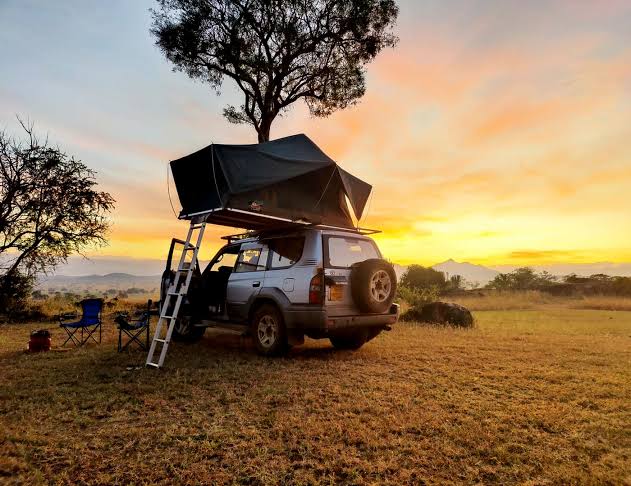
For travellers interested in a more independent adventure, a 4×4 camping safari in Kenya and Tanzania can be arranged with suitable camping equipment, rooftop tents and self-catering facilities.
Travellers can also explore our 4×4 car rental with rooftop tent in Tanzania and Kenya self-drive safari options for independent camping adventures.
Camping arrangements should be confirmed in advance, especially during the Great Migration season when accommodation availability can be limited.
8. Why Choose a Maasai Mara and Serengeti Camping Safari?
A camping safari through Kenya and Tanzania is ideal for adventurous travellers who want to explore East Africa without committing to luxury lodge accommodation throughout their holiday.
Some of the main advantages include:
- More affordable accommodation compared with luxury safari lodges.
- Opportunities to experience two world-famous wildlife destinations.
- Flexible travel arrangements.
- Excellent opportunities for wildlife photography.
- Opportunities to follow the Great Wildebeest Migration.
- Options for self-drive and guided camping adventures.
- An excellent choice for couples, friends and small groups.
Camping does not mean compromising on wildlife viewing. Visitors can enjoy professional guiding, organised game drives and access to the same wildlife areas, subject to the applicable park and campsite regulations.
Explore our East Africa camping safaris for more adventurous travel experiences across the region.
Suggested 10-Day Maasai Mara and Serengeti Camping Safari Itinerary
| Day | Destination | Activities |
|---|---|---|
| 1 | Arusha – Karatu | Arrival, safari briefing and camping |
| 2 | Karatu – Serengeti | Drive through Ngorongoro Conservation Area and afternoon game drive |
| 3 | Serengeti National Park | Full-day wildlife game drives |
| 4 | Serengeti National Park | Migration viewing and predator tracking |
| 5 | Serengeti – Isebania – Maasai Mara | Cross-border journey and transfer to campsite |
| 6 | Maasai Mara | Full-day wildlife game drives |
| 7 | Maasai Mara | Great Migration viewing and big cat tracking |
| 8 | Maasai Mara | Full-day safari and optional cultural experience |
| 9 | Maasai Mara – Nairobi | Scenic drive and onward transfer |
| 10 | Nairobi | Departure |
This is an illustrative itinerary. Actual driving distances, border arrangements and park entry requirements should be checked before booking. The Serengeti-to-Maasai Mara transfer is a substantial journey, and a longer itinerary may be more comfortable.
The itinerary can also be reversed, starting in Nairobi and ending in Arusha.
9. Transport Options for the Safari
The safari can be organised using suitable 4×4 safari vehicles, allowing travellers to enjoy a comfortable journey across Kenya and Tanzania.
For camping enthusiasts, a Toyota Land Cruiser equipped with a rooftop tent is an excellent option. The vehicle can be supplied with camping equipment, cooking utensils and other essentials.
Available transport arrangements include:
- Private 4×4 safari vehicle with a professional driver-guide.
- Self-drive 4×4 vehicle with rooftop tent.
- Land Cruiser with ground camping equipment.
- Private guided camping safari with meals and accommodation arrangements.
- Cross-border safari vehicle arrangements between Kenya and Tanzania.
For self-drive travellers, cross-border vehicle authorisation, insurance, immigration documentation and rental company permission must be arranged before departure.
Discover our Tanzania 4×4 car rental with rooftop tent and Kenya self-drive safari options for more information about independent travel.
10. Best Time for a Maasai Mara and Serengeti Camping Safari
Kenya and Tanzania can be visited throughout the year, although some months are more favourable for specific wildlife experiences.
January to March: An excellent period for exploring the southern Serengeti and Ndutu calving grounds, with opportunities to see newborn wildebeests and predators.
April to June: The migration generally moves through the central and western Serengeti, although seasonal rainfall can affect road conditions.
July to October: One of the most popular periods for visiting the northern Serengeti and Maasai Mara, particularly for travellers hoping to witness Mara River crossings.
November to December: The herds generally move back towards the eastern and southern Serengeti following seasonal rainfall.
Wildlife sightings are possible throughout the year, but travellers should plan according to the expected migration movements and local weather conditions.
11. What to Pack for a Maasai Mara and Serengeti Camping Safari
Travellers should pack appropriately for wildlife game drives and outdoor camping.
Recommended items include:
- Comfortable safari clothing.
- Lightweight long-sleeved shirts and trousers.
- Warm jacket for early morning game drives.
- Comfortable walking shoes.
- Wide-brimmed hat or cap.
- Sunglasses and sunscreen.
- Insect repellent.
- Camera and extra batteries.
- Binoculars.
- Personal toiletries.
- Reusable drinking water bottle.
- Small day backpack.
- Flashlight or headlamp.
- Personal medication.
Neutral-coloured clothing such as khaki, brown and green is recommended for safari activities.
12. Safari Permits, Park Fees and Costs
Park fees and accommodation are important expenses when planning a Maasai Mara and Serengeti camping safari.
Kenya and Tanzania operate separate national park and conservation fee systems. Travellers visiting both destinations should budget for the applicable park entry fees, camping charges, vehicle fees and other relevant conservation costs.
The total safari cost depends on the number of travellers, season, accommodation arrangements, transport, camping equipment, meals and activities.
The following expenses should be considered when preparing your budget:
| Safari Component | Cost Consideration |
|---|---|
| Serengeti park fees | Tanzania park entry and applicable charges |
| Maasai Mara fees | Applicable reserve or conservancy fees |
| 4×4 safari vehicle | Depends on rental or private hire |
| Camping accommodation | Depends on campsite and facilities |
| Meals | Depends on meal arrangements |
| Border crossing | Immigration and vehicle documentation |
| Driver-guide | Depends on safari arrangement |
| Ngorongoro transit | Applicable fees if using the conservation area route |
| Cultural experience | Optional activity |
| Balloon safari | Optional activity, subject to availability |
For accurate quotations, park fees and camping availability should be checked against the intended travel dates and itinerary.
13. Book Your Maasai Mara and Serengeti Camping Safari
A journey through the Maasai Mara and Serengeti National Park offers an extraordinary opportunity to explore two of Africa’s most celebrated wildlife destinations in one holiday.
From the endless Serengeti plains to the dramatic Mara River crossings, this safari combines wildlife encounters, scenic landscapes, cultural experiences and authentic camping adventures.
Whether you prefer a guided camping safari or an independent self-drive adventure, we can help organise a memorable Kenya and Tanzania wildlife holiday.
Our Kenya and Tanzania camping safaris can be customised to include Great Migration viewing, big cat tracking, cultural experiences, scenic road trips and comfortable camping arrangements.
Contact our safari team to plan your next Maasai Mara and Serengeti Great Migration safari.
FREQUENTLY ASKED QUESTIONS
1. Can I visit Maasai Mara and Serengeti on one safari?
Yes. The two destinations are part of the greater Serengeti-Mara ecosystem and can be combined in one cross-border safari between Kenya and Tanzania.
2. How many days do I need for a Maasai Mara and Serengeti safari?
Ten days is a reasonable starting point. Twelve to fourteen days would allow more time for wildlife viewing and a more relaxed cross-border journey.
3. When is the best time to see the Great Wildebeest Migration?
The migration can be followed throughout the year. January to March is particularly good for the calving season in southern Serengeti, while July to October is generally the best period to target the northern Serengeti and Maasai Mara river-crossing areas.
4. Can I do this safari as a self-drive?
Yes. A suitable 4×4 vehicle can be used, provided cross-border insurance, rental authorisation, park regulations and vehicle documentation are arranged in advance.
5. Is camping possible in Maasai Mara and Serengeti?
Yes. Both destinations have designated camping options, including public and private campsites. Facilities and availability vary by location.
6. Can I witness the Big Five during this safari?
Yes. Both destinations support the Big Five: lions, leopards, elephants, buffaloes and rhinoceroses. However, sightings are never guaranteed, and rhinoceroses are particularly difficult to spot.
7. Can I start the safari in Kenya and finish in Tanzania?
Yes. The safari can be organised in either direction, depending on international flights, border arrangements, vehicle logistics and the preferred migration season.