4×4 Kenya Primate Safari: Forests, Monkeys & East Africa Road Adventure
A 4×4 Kenya primate safari offers a different perspective on Kenya beyond the famous Big Five and the vast savannahs of the Maasai Mara. From the highland forests of Mount Kenya and Aberdare to Kakamega Forest and the western region around Lake Victoria, Kenya provides opportunities to discover monkeys, colobus and other forest wildlife while enjoying an independent 4×4 road trip.
Kenya is especially attractive for travelers who want to combine primate experiences with a traditional wildlife safari. A single self-drive adventure can connect Nairobi, Mount Kenya, Samburu, Lake Nakuru, Maasai Mara and western Kenya, while travelers with more time can continue across the border into Uganda or Rwanda for chimpanzee and gorilla trekking.
With a reliable high-clearance 4×4, travelers can explore Kenya’s varied landscapes at their own pace, combining national parks, forests, lakes, cultural experiences and camping.
Why Choose a 4×4 Kenya Primate Safari?
Kenya has an extensive road network, but some forest and wildlife destinations are reached through gravel roads, rural tracks and mountainous terrain.
A 4×4 can provide greater flexibility for travelers visiting:
- Highland forests
- National parks
- Wildlife conservancies
- Rural Kenya
- Lake Victoria
- Western Kenya
- Mountain regions
- Camping destinations
A 4×4 Kenya safari vehicle is particularly useful when your itinerary combines primate habitats with traditional wildlife parks.
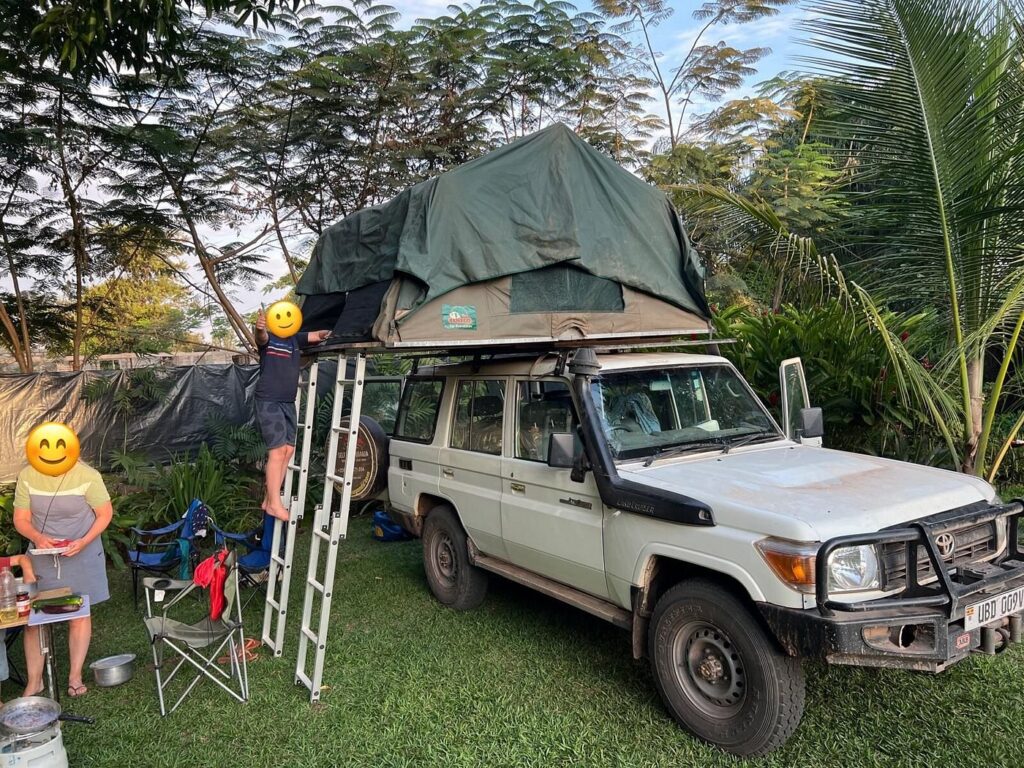
For travelers planning a camping adventure, a 4×4 with rooftop tent can provide additional flexibility and allow you to stay at suitable campsites along the route.
Kenya’s Primate Safari Destinations
Kenya’s primate experiences are spread across different ecological regions. Unlike Uganda and Rwanda, which are particularly famous for mountain gorillas and chimpanzees, Kenya’s primate safari is more focused on monkeys, baboons, colobus and forest species.
Important destinations include:
- Kakamega Forest
- Mount Kenya region
- Aberdare region
- Lake Nakuru region
- Maasai Mara ecosystem
- Samburu region
- Tsavo ecosystem
- Western Kenya
A Kenya primate road trip can therefore be combined with some of the country’s most famous wildlife destinations.
Kakamega Forest Primate Safari
Kakamega Forest is one of Kenya’s most important rainforest environments and is an especially interesting destination for travelers interested in forest wildlife.
Located in western Kenya, the forest provides opportunities to explore a very different ecosystem from the open savannah of the Maasai Mara.
Visitors can look for forest primates including:
- Black-and-white colobus monkeys
- Red-tailed monkeys
- Blue monkeys
- De Brazza’s monkeys
- Other forest wildlife
The forest is also important for birdwatching, making it an excellent addition to a wider Kenya wildlife itinerary.
4×4 Route to Kakamega
A western Kenya road trip can follow a route such as:
Nairobi → Nakuru → Kericho → Kakamega → Kisumu → Lake Victoria
Travelers can then continue toward the Uganda border if their vehicle rental and documentation allow cross-border travel.
Mount Kenya Primate Safari
The Mount Kenya region provides highland scenery, forest environments and opportunities to see several monkey species.
A 4×4 road trip around Mount Kenya can be combined with:
- Mount Kenya National Park
- Ol Pejeta Conservancy
- Samburu
- Laikipia
- Aberdare
- Nairobi
The region is particularly attractive for travelers who want to combine forest wildlife with scenic mountain landscapes.
Mount Kenya and Wildlife
Although the main focus may be primates, Mount Kenya and surrounding conservancies support a broad range of wildlife.
Depending on the destination, visitors may encounter elephants, buffalo, antelope and numerous bird species.
This makes a Mount Kenya 4×4 safari a useful component of a wider wildlife and primate itinerary.
Aberdare Primate Safari
The Aberdare region provides another opportunity to experience Kenya’s highland forests.
The area’s forest habitat is home to various monkey species and other forest wildlife.
An Aberdare visit can be incorporated into a northern Kenya route:
Nairobi → Aberdare → Mount Kenya → Samburu
This provides a combination of highland forest and dry-country landscapes.
Maasai Mara and Primate Experiences
The Maasai Mara is primarily famous for large mammals rather than primates, but monkeys and baboons can also be encountered during a safari.
A Maasai Mara 4×4 safari can therefore be combined with forest destinations elsewhere in Kenya.
For example:
Nairobi → Maasai Mara → Kakamega → Kisumu
This itinerary provides an opportunity to experience the open savannah before moving into western Kenya’s forest environment.
The Maasai Mara also provides opportunities to see:
- Lions
- Leopards
- Cheetahs
- Elephants
- Buffalo
- Giraffes
- Zebras
- Wildebeest
- Hippos
- Various antelope species
This makes it an excellent addition to a primate-focused road trip.
Samburu and Northern Kenya Primate Safari
Northern Kenya provides a dramatic contrast to the forests of western and central Kenya.
Samburu and the surrounding conservancies are characterized by dry landscapes, rocky hills and riverine habitats.
Vervet monkeys and baboons can be encountered alongside the region’s better-known wildlife.
A route combining Samburu with Mount Kenya and Aberdare can create a varied northern Kenya road trip.
Lake Victoria and Western Kenya Primate Safari
Lake Victoria provides an interesting extension for travelers looking beyond the traditional Kenya safari circuit.
A western Kenya road trip can include:
Kakamega → Kisumu → Lake Victoria
Travelers can combine forest exploration with lakeside experiences, cultural activities and local communities.
For travelers continuing into Uganda, western Kenya can become part of a larger East Africa 4×4 primate safari.
Kenya-Uganda Primate 4×4 Safari
Travelers interested in gorillas and chimpanzees can use Kenya as the starting point for a wider East African journey.
One possible route is:
Nairobi → Maasai Mara → Kakamega → Uganda → Kibale → Queen Elizabeth → Bwindi
This combines Kenya’s classic safari experience with Uganda’s major primate destinations.
The itinerary can include:
- Maasai Mara wildlife
- Kakamega Forest
- Chimpanzee tracking
- Savannah wildlife
- Mountain gorilla trekking
- Forest landscapes
- Great Lakes scenery
Cross-border rental conditions vary, so the rental company should approve the route before departure.
Kenya-Rwanda-Uganda Primate Road Trip
For travelers with more time, Kenya can be combined with both Uganda and Rwanda.
A possible route is:
Nairobi → Maasai Mara → Western Kenya → Uganda → Rwanda
The Uganda section can include Kibale and Bwindi, while Rwanda can add Volcanoes National Park.
This creates a multi-country journey featuring:
Savannah + rainforest + mountain forest + gorillas + chimpanzees + monkeys
4×4 Kenya Rooftop Tent Primate Safari
A Kenya 4×4 rooftop tent safari is an attractive option for adventurous travelers.
A suitable camping vehicle can provide accommodation equipment while allowing travelers to move between destinations without depending entirely on lodge availability.
A typical camping package may include:
- Rooftop tent
- Mattress
- Bedding
- Sleeping bags
- Camping table
- Camping chairs
- Cooking utensils
- Gas stove
- Fridge or cooler
- Water containers
- Recovery equipment
- Compressor
- Spare wheel
Camping should always be arranged at designated or authorized campsites.
Best 4×4 for a Kenya Primate Safari
The right vehicle depends on the number of travelers, route and whether you intend to camp.
Possible 4×4 options include:
- Toyota Land Cruiser
- Toyota Prado
- Toyota Hilux
- Comparable high-clearance 4×4
For longer camping journeys, consider a vehicle with:
- 4WD
- High ground clearance
- Strong suspension
- Reliable tyres
- Full-size spare wheel
- Recovery equipment
- Compressor
- Roof rack
- Adequate luggage space
- Refrigerator or cooler
A properly equipped vehicle is particularly valuable when combining Kenya with cross-border destinations.
Kenya Self-Drive Primate Safari
Kenya is well suited to independent road travel for experienced drivers who are comfortable with long distances and changing road conditions.
A Kenya self-drive primate safari can be built around several destinations without requiring a guide throughout the entire journey.
For example:
Nairobi → Mount Kenya → Aberdare → Lake Nakuru → Maasai Mara → Kakamega → Kisumu
Travelers can then return to Nairobi or continue toward Uganda if their vehicle rental agreement allows.
The major advantage of self-drive travel is flexibility. You can decide how much time to spend in each destination and combine wildlife, forests, culture and landscapes according to your interests.
14-Day Kenya 4×4 Primate Safari
A two-week itinerary can provide a balanced combination of forest and savannah experiences.
Days 1–2: Nairobi
Arrive in Nairobi and prepare your 4×4.
Spend time exploring the city or nearby attractions.
Days 3–4: Mount Kenya
Drive north toward the Mount Kenya region.
Explore the surrounding forests and wildlife areas.
Day 5: Aberdare
Continue toward the Aberdare region.
Enjoy highland forest scenery and wildlife.
Days 6–8: Maasai Mara
Travel toward the Maasai Mara for a classic Kenyan wildlife safari.
Spend several days exploring the reserve or surrounding conservancies.
Days 9–10: Western Kenya
Continue toward Kakamega.
Explore the forest and look for forest primates.
Days 11–12: Kakamega and Kisumu
Spend more time in western Kenya before continuing toward Lake Victoria.
Days 13–14: Return or Continue to Uganda
Return toward Nairobi or continue toward the Uganda border if cross-border arrangements have been completed.
21-Day Kenya-Uganda Primate Safari
For a longer trip, a three-week itinerary can incorporate major Kenyan wildlife destinations and Uganda’s primate experiences.
Days 1–3: Nairobi and Mount Kenya
Begin the trip in Nairobi before traveling toward Mount Kenya.
Days 4–5: Samburu
Explore northern Kenya.
Days 6–8: Maasai Mara
Spend several days in the Maasai Mara ecosystem.
Days 9–10: Kakamega
Travel west and explore Kakamega Forest.
Days 11–13: Kibale
Cross into Uganda and continue toward Kibale National Park.
Experience chimpanzee tracking and forest activities.
Days 14–15: Queen Elizabeth
Continue south toward Queen Elizabeth National Park.
Days 16–18: Bwindi
Travel toward southwestern Uganda for mountain gorilla trekking.
Days 19–20: Lake Mburo
Continue toward Lake Mburo for another wildlife experience.
Day 21: Entebbe or Kampala
Complete the road trip.
Actual driving times, border requirements, permits and vehicle authorization should be confirmed before travel.
Kenya Primate Safari and Wildlife
One of the biggest advantages of planning a primate-focused Kenya safari is the opportunity to combine forest wildlife with traditional safari experiences.
A single trip can include:
Monkeys + colobus + baboons + elephants + lions + leopards + giraffes + zebras + wildebeest
This creates a broader wildlife experience than focusing exclusively on primates.
Best Time for a Kenya Primate Safari
Kenya can be visited throughout the year, although weather conditions vary between regions.
The dry periods can provide easier road travel and favorable conditions for wildlife viewing.
Forest destinations can remain green and attractive during wetter periods, although rain may make some tracks more challenging.
Travelers planning a multi-country Kenya-Uganda or Kenya-Rwanda itinerary should consider the weather conditions across all destinations rather than relying on the climate of Nairobi alone.
What to Pack for a Kenya Primate Safari
A Kenya primate and wildlife safari requires a combination of safari and hiking equipment.
Recommended items include:
- Comfortable hiking shoes
- Lightweight trousers
- Long-sleeved shirts
- Waterproof jacket
- Fleece or warm layer
- Hat
- Sunglasses
- Sunscreen
- Insect repellent
- Reusable water bottle
- Daypack
- Binoculars
- Camera
- Waterproof bag
- Personal medication
- Headlamp
- Camping equipment if applicable
If your itinerary includes high-altitude areas such as Mount Kenya, additional warm clothing may be useful.
Responsible Primate Tourism in Kenya
Responsible wildlife tourism helps protect Kenya’s forests and wildlife.
When visiting primate habitats, travelers should:
- Follow ranger and guide instructions
- Maintain appropriate distances
- Never feed wildlife
- Avoid touching animals
- Keep noise levels low
- Stay on designated trails
- Avoid visiting wildlife when sick
- Carry rubbish out of protected areas
- Respect local communities
- Follow park regulations
Responsible behavior is especially important in forest environments where wildlife can be sensitive to human disturbance.
Kenya Primate Safari Cost
The cost of a Kenya 4×4 primate safari depends on the vehicle, itinerary, accommodation and number of travelers.
Typical expenses include:
| Expense | Description |
|---|---|
| 4×4 rental | Vehicle for the safari |
| Fuel | Depends on route |
| Park fees | Destination dependent |
| Conservancy fees | Where applicable |
| Accommodation | Camping, hotels or lodges |
| Food | Restaurants or self-catering |
| Guide/ranger fees | Required for certain activities |
| Camping equipment | Optional |
| Border costs | Applicable to cross-border routes |
| Insurance | Vehicle and travel insurance |
Always confirm current park, conservancy and activity fees before booking because charges can change.
Kenya Primate Safari for Families
A 4×4 road trip can also be adapted for families.
A family itinerary can combine shorter driving days with wildlife destinations and forest experiences.
A possible route is:
Nairobi → Lake Nakuru → Mount Kenya → Maasai Mara → Kakamega
Families continuing into Uganda can add chimpanzee or gorilla experiences where age and activity requirements permit.
Parents should check the specific age requirements and physical demands of each primate activity before booking.
Kenya Primate Safari Photography
Kenya’s combination of forest and savannah provides excellent opportunities for wildlife photography.
For forest photography, useful equipment includes:
- Telephoto lens
- Wide-angle lens
- Extra batteries
- Extra memory cards
- Waterproof camera protection
- Lightweight camera bag
Forest environments can have lower light levels than open savannah, so travelers should be prepared for changing lighting conditions.
Planning a Kenya 4×4 Primate Safari
A successful road trip begins with realistic planning.
Choose Your Primate Destinations
Decide whether your focus is primarily:
- Forest monkeys
- Colobus
- Highland wildlife
- Western Kenya forests
- A Kenya-Uganda primate journey
- A wider gorilla and chimpanzee adventure
Add Wildlife Parks
Combine forest destinations with Kenya’s major wildlife areas.
Select the Right 4×4
Choose your vehicle according to the number of travelers, luggage, terrain and camping requirements.
Plan Your Driving Days
Do not underestimate distances in Kenya.
Allow enough time for road conditions, stops, wildlife viewing and unexpected delays.
Check Cross-Border Requirements
If traveling to Uganda or Rwanda, confirm all vehicle authorization, insurance, customs and immigration requirements before departure.
Why Choose a Kenya 4×4 Primate Safari?
A 4×4 Kenya primate safari provides an opportunity to look beyond the country’s famous Big Five destinations and discover its forests, mountains, lakes and diverse monkey species.
A journey can combine:
Kakamega Forest + Mount Kenya + Aberdare + Maasai Mara + Lake Victoria
For travelers with additional time, Kenya can become the beginning of a much larger East African primate adventure connecting with Uganda and Rwanda.
Whether you prefer comfortable lodges, independent travel, camping or a 4×4 with rooftop tent, a carefully planned Kenya road trip can combine primates, wildlife, landscapes and cultural experiences in one journey.
Book Your 4×4 Kenya Primate Safari
Planning a Kenya primate safari is easier when the vehicle, route and accommodation are matched to your travel style.
Whether you are looking for a 4×4 rental in Kenya, a rooftop-tent camping vehicle, a self-drive wildlife adventure or a multi-country Kenya-Uganda-Rwanda itinerary, we can help you create a practical route.
Explore Kenya’s forests, mountains, savannahs and lakes by 4×4, and extend your journey into Uganda or Rwanda for chimpanzee and gorilla experiences.
Start planning your 4×4 Kenya primate safari today and discover a different side of East Africa beyond the traditional safari circuit.
Frequently Asked Questions
Can I do a self-drive primate safari in Kenya?
Yes. Travelers can drive between many Kenyan wildlife and forest destinations independently, provided they comply with park, reserve and vehicle-rental regulations.
What primates can I see in Kenya?
Depending on the destination, Kenya offers opportunities to see colobus monkeys, vervet monkeys, blue monkeys, red-tailed monkeys, baboons and other primate species.
Where can I see colobus monkeys in Kenya?
Colobus monkeys occur in several forest environments in Kenya, including areas around the coast and western Kenya. Specific sightings depend on location and conditions.
Is Kakamega Forest good for a primate safari?
Kakamega is an important forest destination in western Kenya and can be incorporated into a wider wildlife and primate road trip.
Can I combine Kenya with Uganda for gorilla trekking?
Yes, subject to current cross-border vehicle and immigration requirements. A Kenya-Uganda route can combine Kenya’s wildlife destinations with chimpanzee and gorilla experiences in Uganda.
Can I rent a 4×4 with a rooftop tent in Kenya?
Rooftop-tent 4×4 rental options are available depending on the rental company and vehicle availability. Confirm whether the vehicle can be taken across borders if you plan a multi-country trip.
Do I need a 4×4 in Kenya?
A 4×4 is not necessary for every road, but it can be useful for safari tracks, rural roads, forest destinations and longer camping journeys.
Can I combine the Maasai Mara with a primate safari?
Yes. The Maasai Mara can be combined with western Kenya forest destinations such as Kakamega to create a safari that includes both savannah wildlife and forest primates.
How many days do I need?
A Kenya-only itinerary can be designed around one to two weeks, while a Kenya-Uganda or Kenya-Rwanda primate adventure may require two to three weeks or longer.
Can I combine Kenya, Uganda and Rwanda?
Yes. A longer East African road trip can connect Kenya with Uganda and Rwanda, subject to current border, vehicle and insurance requirements.
Is camping possible on a Kenya primate safari?
Yes, camping can be incorporated where designated campsites are available. A rooftop-tent 4×4 is particularly useful for travelers who prefer an independent camping itinerary.
Can families do a Kenya primate safari?
Yes. Family itineraries can combine wildlife parks and forest destinations, although specific primate activities may have age, health or physical requirements that should be checked before booking.