
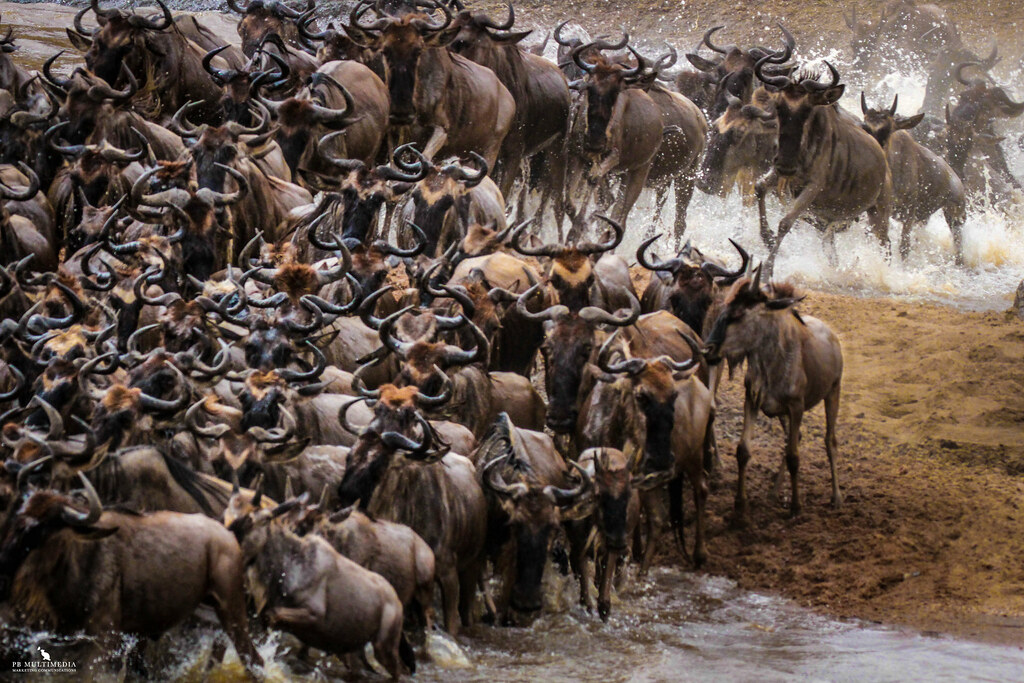
3-Week Great Wildebeest Migration Safari in Tanzania and Kenya: Serengeti, Maasai Mara and the Big Five
Introduction: Experience the Great Wildebeest Migration in Tanzania and Kenya
A 3-week Great Wildebeest Migration safari in Tanzania and Kenya offers an exceptional opportunity to witness one of the world’s most spectacular wildlife events while exploring two of Africa’s leading safari destinations.
Every year, millions of wildebeest, accompanied by hundreds of thousands of zebras and gazelles, move across the Serengeti-Mara ecosystem in search of fresh grazing and water. This extraordinary natural cycle takes place between Tanzania’s Serengeti National Park and Kenya’s Maasai Mara National Reserve.
The migration is famous for its enormous herds, dramatic predator encounters and challenging river crossings. Lions, leopards, cheetahs, hyenas and crocodiles follow the migrating animals, creating remarkable wildlife-viewing opportunities throughout the year.
Tanzania offers extensive opportunities to explore the Serengeti, Ngorongoro Crater and Tarangire National Park, while Kenya adds the spectacular Maasai Mara, Amboseli, Lake Nakuru and other wildlife destinations.
During this three-week adventure, visitors can follow the migrating herds through different parts of the ecosystem, enjoy Big Five game drives, discover beautiful African landscapes and experience the cultural heritage of local communities.
Whether you are a wildlife photographer, nature enthusiast, family traveller or adventure seeker, a Tanzania and Kenya safari provides an unforgettable journey through East Africa.
Why Combine Tanzania and Kenya for the Great Migration?
Tanzania and Kenya share the Serengeti-Mara ecosystem, which supports one of the largest terrestrial wildlife migrations on Earth.
Tanzania’s Serengeti National Park is the main destination for following the migrating herds during the calving season, their movement across the central and western plains, and their journey towards the northern Serengeti.
Kenya’s Maasai Mara National Reserve is internationally recognised for its exceptional wildlife populations and opportunities to witness the migration when the herds cross into Kenya.
Combining both countries allows travellers to experience different stages of the migration rather than concentrating on a single park.
Beyond the migration, Tanzania offers the Ngorongoro Crater, Tarangire’s elephant herds and the diverse wildlife of Lake Manyara. Kenya provides additional experiences in Amboseli National Park, Lake Nakuru National Park and the Maasai Mara.
This combination makes a three-week itinerary ideal for travellers who want to explore the wider East African safari circuit.
Understanding the Great Wildebeest Migration
The Great Wildebeest Migration is a continuous movement of wildlife across the Serengeti-Mara ecosystem.
More than a million wildebeest, together with large numbers of zebras and gazelles, move between Tanzania and Kenya in response to seasonal rainfall, water availability and grazing conditions.
The migration does not follow an exact calendar. The herds move according to environmental conditions, meaning their location can change from one year to another.
The most famous stages include the calving season in southern Tanzania, movement through the Serengeti, Grumeti River crossings in western Tanzania and Mara River crossings in northern Tanzania and Kenya.
1. Southern Serengeti and Ndutu – Wildebeest Calving Season
The southern Serengeti and Ndutu region are famous for the annual wildebeest calving season, which generally takes place between January and March.
During this period, large herds gather on the nutrient-rich short-grass plains to give birth. Thousands of calves can be born during the peak calving period, attracting predators such as lions, cheetahs, hyenas and leopards.
The open grasslands provide excellent opportunities for wildlife photography, particularly when newborn calves are taking their first steps.
For travellers interested in witnessing the beginning of the migration cycle, Ndutu is one of the most rewarding places to visit.
2. Central Serengeti – Wildlife and Migration Viewing
The central Serengeti, particularly the Seronera region, offers excellent wildlife viewing throughout much of the year.
The area is known for its large populations of lions, leopards, cheetahs, elephants, giraffes and other wildlife.
Depending on the season, migrating wildebeest and zebras may pass through the central plains as they move between the southern and western parts of the ecosystem.
Central Serengeti is an excellent destination for combining migration viewing with traditional Big Five game drives.
3. Western Serengeti – Grumeti River Crossings
The Western Corridor is an important stage of the Great Migration, particularly around May, June and July.
As the herds move westwards, they encounter the Grumeti River, where crocodiles inhabit the deeper pools.
Wildebeest gather along the riverbanks before attempting to cross. These encounters can create dramatic wildlife scenes, although the timing and location of crossings are unpredictable.
The Western Serengeti is also home to resident wildlife, making it rewarding even when large migration herds are elsewhere.
4. Northern Serengeti – Mara River Crossings in Tanzania
The Northern Serengeti is one of the most famous destinations for witnessing the dramatic river crossings associated with the Great Migration.
Between approximately July and October, many herds move towards the Mara River and the Kenya-Tanzania border.
Large groups of wildebeest may gather along the riverbanks before crossing through crocodile-inhabited waters.
The crossings are among the most exciting wildlife spectacles in Africa, but they cannot be guaranteed on a particular day.
Travellers hoping to witness this event should spend several nights in the northern Serengeti rather than relying on a single game drive.
5. Maasai Mara – The Migration in Kenya
Kenya’s Maasai Mara National Reserve is another major destination for the Great Wildebeest Migration.
When the herds cross the Mara River from Tanzania, they spread across the Mara’s grasslands in search of fresh grazing.
The reserve offers exceptional opportunities to observe large wildebeest herds, zebras, gazelles and predators.
The migration is particularly associated with the Maasai Mara between approximately July and October, although exact arrival and departure dates vary.
The Mara also supports substantial resident wildlife populations, including lions, leopards, cheetahs, elephants, buffaloes and giraffes.
For travellers who want to experience both sides of the migration ecosystem, combining the northern Serengeti with the Maasai Mara is an excellent choice.
Other Wildlife Destinations to Explore in Tanzania and Kenya
The Great Migration is the main attraction, but Tanzania and Kenya offer several other remarkable safari destinations.
1. Ngorongoro Crater, Tanzania
The Ngorongoro Crater is one of Africa’s most remarkable wildlife destinations.
This enormous volcanic caldera supports a diverse range of wildlife within a relatively compact area.
Visitors can encounter lions, elephants, buffaloes, zebras, wildebeest, hippos and endangered black rhinos.
The crater is an excellent addition to a Serengeti migration safari, particularly for travellers interested in seeing a wide variety of wildlife within one landscape.
2. Tarangire National Park, Tanzania
Tarangire National Park is famous for its large elephant herds, ancient baobab trees and beautiful savannah scenery.
The Tarangire River attracts wildlife during the dry season, creating excellent opportunities to observe elephants, giraffes, zebras, buffaloes and numerous antelope species.
The park also supports predators such as lions and leopards, as well as a remarkable diversity of birds.
3. Amboseli National Park, Kenya
Amboseli National Park is one of Kenya’s most famous safari destinations.
Located near the Tanzania-Kenya border, the park is known for its large elephant populations and spectacular views of Mount Kilimanjaro.
Visitors can enjoy game drives across open plains, seasonal wetlands and woodland habitats.
Amboseli provides an excellent opportunity to combine wildlife photography with views of Africa’s highest mountain.
4. Lake Nakuru National Park, Kenya
Lake Nakuru National Park is a popular destination in Kenya’s Great Rift Valley.
The park is known for its birdlife, scenic lake landscapes, rhinos, giraffes, buffaloes and other wildlife.
It is particularly attractive to travellers who want to add a different ecosystem to their Tanzania and Kenya safari.
5. Maasai Cultural Experiences
A visit to a Maasai community can add a cultural dimension to the wildlife adventure.
The Maasai people have a long-standing cultural connection with the landscapes of northern Tanzania and southern Kenya.
Visitors can learn about traditional lifestyles, livestock keeping, local architecture, music, dance and community conservation initiatives.
Cultural visits should be arranged respectfully through genuine community-led experiences.
21-Day Tanzania and Kenya Great Wildebeest Migration Safari Itinerary
This suggested 21-day itinerary begins in Arusha, Tanzania, and concludes in Nairobi, Kenya.
It combines Tanzania’s northern safari circuit, the Serengeti migration areas and Kenya’s Maasai Mara, with additional opportunities to explore Amboseli and Lake Nakuru.
The itinerary should be adjusted according to the month of travel because the best Serengeti and Maasai Mara locations depend on the movement of the herds.
Days 1–2: Arrival in Arusha, Tanzania
Arrive at Kilimanjaro International Airport and transfer to your hotel in Arusha.
Arusha is the main gateway to Tanzania’s northern safari circuit and an ideal starting point for a Great Migration adventure.
Depending on your arrival time, explore the town, visit local markets or relax at your accommodation.
Activities:
- Airport pickup and hotel transfer.
- Arusha town exploration.
- Safari briefing.
- Preparation for the northern circuit.
Overnight: Arusha.
Days 3–4: Tarangire National Park – Elephants and Baobab Landscapes
Travel to Tarangire National Park, famous for its large elephant herds and impressive baobab trees.
Enjoy game drives across the park in search of elephants, giraffes, zebras, buffaloes, wildebeest and other wildlife.
The Tarangire River is an important source of water during the dry season, attracting large concentrations of animals.
Activities:
- Morning and afternoon game drives.
- Elephant viewing.
- Baobab landscape photography.
- Birdwatching.
Overnight: Tarangire area.
Day 5: Ngorongoro Conservation Area
Continue towards the Ngorongoro Conservation Area.
Enjoy scenic views of the crater highlands and surrounding landscapes.
Depending on the itinerary, you can visit a Maasai community or explore selected viewpoints before continuing towards your accommodation.
Overnight: Ngorongoro or Karatu.
Day 6: Ngorongoro Crater – Big Five Wildlife Viewing
Descend into the Ngorongoro Crater for a full-day game drive.
The crater supports a remarkable concentration of wildlife, including lions, elephants, buffaloes, zebras, wildebeest and black rhinos.
Its varied habitats include grasslands, woodland, swamps and a central soda lake.
After the game drive, continue towards the Serengeti.
Overnight: Serengeti or Karatu, depending on the chosen route and accommodation.
Days 7–9: Serengeti National Park – Following the Great Migration
Explore the Serengeti ecosystem, choosing the most suitable migration area for your travel dates.
During January to March, the southern Serengeti and Ndutu region are excellent for calving season.
During May to July, the Western Corridor and Grumeti region may offer opportunities to encounter migrating herds.
Between July and October, the Northern Serengeti is particularly popular for Mara River crossing opportunities.
Enjoy game drives with experienced guides who can help locate the herds and identify wildlife viewing opportunities.
Activities:
- Wildebeest migration game drives.
- Predator sightings.
- Big Five wildlife viewing.
- Wildlife photography.
- Optional hot-air balloon safari, subject to availability.
Overnight: Serengeti.
Days 10–12: Northern Serengeti – Mara River Crossings
During the appropriate migration season, travel to the Northern Serengeti for several days of wildlife exploration.
The Mara River is one of the most famous locations associated with the Great Migration.
Spend time exploring the riverbanks and surrounding plains in search of migrating wildebeest, zebras and predators.
The timing of river crossings is unpredictable, so several nights in the area provide a better opportunity to encounter this natural event.
Outside the main northern migration period, these days can be redirected towards the active migration area in the Serengeti.
Activities:
- Mara River wildlife viewing.
- Wildebeest migration game drives.
- Crocodile and predator sightings.
- Full-day wildlife photography.
Overnight: Northern Serengeti.
Day 13: Cross into Kenya and Travel Towards the Maasai Mara
After your final Serengeti game drive, travel towards the appropriate border crossing and continue to Kenya.
Cross-border safari arrangements must be confirmed in advance. Depending on the operator, vehicle permissions and border procedures, a vehicle change or separate safari vehicle may be necessary.
Continue towards the Maasai Mara, one of Kenya’s most celebrated wildlife destinations.
Overnight: Maasai Mara area.
Days 14–16: Maasai Mara National Reserve – Great Migration in Kenya
Spend three days exploring the Maasai Mara and following the migration where the herds are present.
The reserve is particularly famous for its large wildlife populations and opportunities to observe migrating wildebeest and zebras during the Kenya phase of the migration.
Game drives can take you across open grasslands, riverine forests and rolling plains in search of lions, cheetahs, leopards, elephants, buffaloes and other wildlife.
If travelling during the migration season, your guide can focus on areas where the herds are gathering or crossing the Mara River.
Activities:
- Great Migration game drives.
- Mara River exploration.
- Big Five wildlife viewing.
- Predator photography.
- Optional hot-air balloon safari.
- Maasai cultural visit.
Overnight: Maasai Mara.
Day 17: Travel to Lake Nakuru National Park
Leave the Maasai Mara and travel towards Lake Nakuru National Park in Kenya’s Great Rift Valley.
Enjoy the changing landscapes along the journey.
Lake Nakuru is famous for its birdlife, rhinos, Rothschild’s giraffes and scenic lake environment.
Depending on arrival time, enjoy an afternoon game drive.
Overnight: Lake Nakuru area.
Day 18: Lake Nakuru – Wildlife and Birdwatching
Spend the day exploring Lake Nakuru National Park.
The park offers opportunities to see both black and white rhinos, Rothschild’s giraffes, buffaloes, zebras and various antelope species.
Birdwatching is another major attraction, with numerous waterbirds and other species inhabiting the park.
Enjoy morning and afternoon wildlife viewing before returning to your lodge.
Overnight: Lake Nakuru area.
Days 19–20: Amboseli National Park – Elephants and Mount Kilimanjaro
Travel towards Amboseli National Park, located in southern Kenya near the Tanzania border.
Amboseli is internationally recognised for its large elephant populations and spectacular views of Mount Kilimanjaro.
Enjoy game drives across the park’s open plains and seasonal wetlands.
Look for elephants, lions, buffaloes, zebras, giraffes and other wildlife.
The park is particularly attractive to wildlife photographers because of opportunities to photograph elephants against the backdrop of Mount Kilimanjaro when weather conditions provide clear views.
Activities:
- Morning and afternoon game drives.
- Elephant photography.
- Mount Kilimanjaro viewpoints.
- Birdwatching.
- Savannah wildlife exploration.
Overnight: Amboseli.
Day 21: Return to Nairobi and Departure
After breakfast, leave Amboseli and travel towards Nairobi.
Depending on your international flight schedule, you can enjoy a short city visit or proceed directly to Jomo Kenyatta International Airport.
Your three-week Tanzania and Kenya Great Migration safari concludes with unforgettable memories of migrating wildebeest, dramatic river crossings, African predators, elephants and the extraordinary landscapes of East Africa.
Best Time for a Tanzania and Kenya Great Migration Safari
The best time depends on which stage of the migration you want to experience.
| Period | Main migration location | Wildlife experience |
|---|---|---|
| January–March | Ndutu and Southern Serengeti, Tanzania | Wildebeest calving and predator activity |
| April–May | Southern and Central Serengeti, Tanzania | Herd movement and green-season landscapes |
| May–July | Western Serengeti, Tanzania | Movement towards the Grumeti region and possible river crossings |
| July–October | Northern Serengeti and Maasai Mara | Opportunities for Mara River crossings and large herds |
| November–December | Eastern and Southern Serengeti, Tanzania | Herds gradually return towards the southern plains |
These are general seasonal patterns rather than fixed dates. Rainfall, grazing conditions and other environmental factors influence the movement of the herds each year.
For travellers hoping to experience the migration in both countries, July to October is generally a popular period. However, the best itinerary should be planned around the expected herd location rather than relying only on calendar dates.
How Much Does a Tanzania and Kenya Great Migration Safari Cost?
The cost of a 21-day Tanzania and Kenya safari depends on the travel season, group size, accommodation category, transport arrangements and selected activities.
The main cost components include:
- Private 4×4 safari vehicle and professional driver-guide.
- Tanzania national park and conservation fees.
- Kenya national park or reserve entry fees.
- Accommodation in the Serengeti and Maasai Mara.
- Accommodation in Tarangire, Ngorongoro, Nakuru and Amboseli.
- Cross-border transport arrangements.
- Meals and airport transfers.
- Optional hot-air balloon safaris.
- Cultural experiences and additional activities.
Peak migration months, especially July to October, can attract higher accommodation rates in the Northern Serengeti and Maasai Mara.
Travellers should book early to secure suitable camps and lodges in the migration areas.
Accommodation During the Tanzania and Kenya Safari
The safari can be organised with budget, midrange or luxury accommodation.
In Tanzania, options include safari lodges, permanent tented camps and mobile migration camps. Mobile camps can be particularly useful because they may be positioned close to seasonal migration areas.
Tarangire and Ngorongoro also offer a variety of lodges and tented camps.
In Kenya, the Maasai Mara offers accommodation ranging from comfortable safari camps to luxury tented lodges. Lake Nakuru and Amboseli also provide a selection of safari lodges and camps.
For the best migration experience, accommodation should be selected according to the expected location of the herds and the route planned for the safari.
Transport: Private Guided Safari or Self-Drive Adventure?
A Tanzania and Kenya Great Migration safari can be arranged as a private guided experience or a combination of guided and independent travel.
In Tanzania, a reliable 4×4 safari Land Cruiser is recommended for exploring Tarangire, Ngorongoro and the Serengeti.
In Kenya, a 4×4 safari vehicle is also recommended for travelling through the Maasai Mara, Lake Nakuru and Amboseli.
A professional safari guide can help interpret animal behaviour, locate wildlife and follow the movement of the migrating herds.
Travellers interested in self-drive safaris can explore selected sections of both countries using a suitable 4×4 rental vehicle. However, cross-border travel requires advance confirmation of vehicle authorisation, insurance, customs documentation and rental company permission.
For a migration-focused itinerary, a guided safari is often the most practical option because local knowledge can improve the chances of locating the herds.
What to Pack for a Tanzania and Kenya Great Migration Safari
Prepare for warm savannah conditions, cooler early mornings and occasional rain.
Recommended items include:
- Lightweight safari clothing.
- Neutral-coloured shirts and trousers.
- Warm fleece or jacket for early morning game drives.
- Comfortable walking shoes.
- Waterproof jacket.
- Sun hat and sunglasses.
- Sunscreen.
- Binoculars.
- Camera with a suitable zoom lens.
- Extra camera batteries and memory cards.
- Insect repellent.
- Small daypack.
- Reusable drinking water bottle.
- Personal medication.
- Lightweight day clothing for warm afternoons.
Wildlife photographers should consider carrying additional camera batteries, memory cards and a suitable telephoto lens.
Frequently Asked Questions About Tanzania and Kenya Great Migration Safaris
1. Does the Great Wildebeest Migration take place in both Tanzania and Kenya?
Yes. The migration moves across the Serengeti-Mara ecosystem, which extends from Tanzania’s Serengeti National Park into Kenya’s Maasai Mara National Reserve.
2. When is the best time to see the Great Migration in Tanzania?
January to March is generally the main calving season in the southern Serengeti and Ndutu. The Western Corridor is important around May to July, while the Northern Serengeti is popular for river-crossing opportunities between approximately July and October.
3. When does the migration reach Kenya?
Large herds commonly move into the Maasai Mara around July, although timing varies according to rainfall and grazing conditions. Many remain in the Mara during parts of August, September and October before moving south again.
4. Where can I see the Mara River crossings?
The Mara River flows through the Northern Serengeti and Kenya’s Maasai Mara. Both sides of the ecosystem offer opportunities to witness crossings, depending on where the herds are gathering.
5. Are river crossings guaranteed?
No. River crossings are natural events and cannot be guaranteed. The herds may gather along the riverbanks for hours or days before crossing, and some groups may use different crossing points.
6. Can I visit the Serengeti and Maasai Mara on the same safari?
Yes. A three-week itinerary provides enough time to explore Tanzania’s Serengeti and continue into Kenya’s Maasai Mara, subject to cross-border transport and vehicle arrangements.
7. Can I see the Big Five during this safari?
Yes. The Serengeti, Ngorongoro Crater and Maasai Mara offer opportunities to see lions, leopards, elephants, buffaloes and rhinos. However, sightings are never guaranteed.
8. Is a 4×4 vehicle necessary?
A 4×4 is strongly recommended for the Serengeti, Ngorongoro, Maasai Mara and other safari destinations. It provides better access to wildlife-viewing tracks, particularly during rainy conditions.
9. How many days are needed for a Tanzania and Kenya migration safari?
Approximately 18 to 21 days is ideal for combining Tanzania’s northern safari circuit, several migration areas in the Serengeti and Kenya’s Maasai Mara, with additional destinations such as Lake Nakuru and Amboseli.
10. Should I book my safari in advance?
Yes. Early booking is recommended, particularly for July to October, when demand for accommodation in the Northern Serengeti and Maasai Mara is high.
Book Your 3-Week Tanzania and Kenya Great Wildebeest Migration Safari
Experience one of Africa’s most extraordinary wildlife events on a carefully organised Tanzania and Kenya Great Wildebeest Migration safari.
Follow the migrating herds across the Serengeti plains, explore the dramatic river-crossing areas of northern Tanzania and continue into Kenya’s famous Maasai Mara.
Discover the elephants of Tarangire, the wildlife-rich Ngorongoro Crater, the spectacular landscapes of Amboseli and the diverse habitats of Lake Nakuru.
From enormous wildebeest herds and dramatic predator encounters to Big Five game drives and cultural experiences, this three-week adventure offers an exceptional way to explore East Africa.
Whether you prefer a private guided safari, a luxury migration adventure, a family wildlife holiday or a customised self-drive experience, we can tailor the itinerary to your preferred travel dates, accommodation standards and budget.
Contact our safari team today to plan your Tanzania and Kenya Great Wildebeest Migration safari and experience the remarkable wildlife of East Africa.