
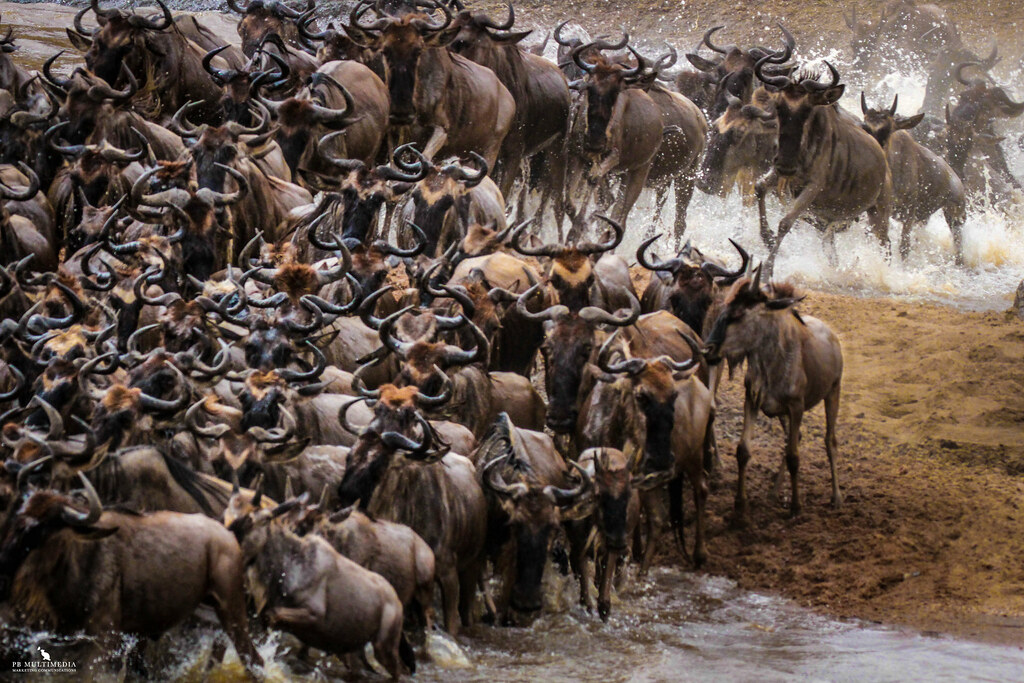
Renting a 4×4 with a Rooftop Tent for the Great Wildebeest Migration in Tanzania and Kenya
Introduction: Experience the Great Wildebeest Migration with a 4×4 Rooftop Tent
The Great Wildebeest Migration is one of the most spectacular wildlife events on Earth. Every year, millions of wildebeest, accompanied by hundreds of thousands of zebras and gazelles, move across the vast savannah landscapes of East Africa in search of fresh grazing and water.
This extraordinary natural phenomenon takes place across the Serengeti ecosystem in Tanzania and the Maasai Mara ecosystem in Kenya, creating some of Africa’s most remarkable wildlife viewing opportunities.
For adventurous travellers seeking independence and flexibility, renting a 4×4 with a rooftop tent for the Great Wildebeest Migration offers an exciting way to experience this iconic wildlife spectacle.
Instead of depending entirely on conventional safari packages, travellers can hire a fully equipped 4×4, carry their camping equipment and explore different wildlife destinations at their own pace.
Whether you are planning to witness the dramatic Mara River crossings, explore the endless plains of the Serengeti or follow the migrating herds through the Ngorongoro Conservation Area, a reliable 4×4 rooftop tent rental can make your safari more flexible and adventurous.
Why Rent a 4×4 with a Rooftop Tent for the Wildebeest Migration?
A 4×4 rooftop tent rental combines transportation and camping accommodation, making it an attractive option for independent travellers, couples, families and overlanders exploring Tanzania and Kenya.
1. Greater Flexibility to Follow the Migration
The Great Migration is a continuous natural movement rather than a fixed event taking place in one location. The herds move between different grazing areas throughout the year.
Having your own 4×4 gives you greater flexibility to explore different parts of the migration ecosystem and spend more time in areas where wildlife activity is particularly rewarding.
2. Convenient Mobile Camping Accommodation
A rooftop tent provides a practical sleeping arrangement while travelling between safari destinations.
Depending on the rental package, camping equipment may include a comfortable mattress, sleeping bags, camping chairs, tables, cooking utensils and a refrigerator.
This arrangement allows you to enjoy camping experiences close to some of East Africa’s most spectacular wildlife landscapes, subject to designated campsite regulations.
3. Access to Remote Safari Destinations
Some of the most rewarding wildlife viewing areas are reached through gravel roads, rough tracks and remote wilderness landscapes.
A properly equipped 4×4 safari vehicle provides the ground clearance and capability required for many of these journeys.
4. Flexible Safari Budgets
For couples and small groups, combining vehicle hire with camping can help reduce accommodation expenses compared with staying exclusively in luxury safari lodges and tented camps.
It also allows travellers to choose their preferred camping facilities and organise their own meals.
Best Destinations for Wildebeest Migration Safaris with a Rooftop Tent
Tanzania and Kenya offer outstanding opportunities to experience the Great Wildebeest Migration. Each destination provides different wildlife viewing experiences depending on the season.
1. Serengeti National Park, Tanzania
Serengeti National Park is the heart of the Great Wildebeest Migration and one of Africa’s most celebrated wildlife destinations.
The park’s extensive grasslands support enormous populations of wildebeest, zebras, gazelles, lions, leopards, cheetahs and other wildlife.
A 4×4 rental in Tanzania provides an opportunity to explore different Serengeti regions depending on the seasonal movement of the herds.
Some important areas include:
- Southern Serengeti: Famous for the wildebeest calving season, particularly around Ndutu.
- Central Serengeti: An excellent year-round wildlife destination, especially around the Seronera region.
- Western Serengeti: Known for seasonal migration movements and the Grumeti River crossings.
- Northern Serengeti: Particularly famous for the dramatic Mara River crossings.
For travellers planning a self-drive migration safari, a suitable 4×4 with camping equipment provides flexibility when moving between these regions.
2. Ngorongoro Conservation Area and Ndutu, Tanzania
The Ngorongoro Conservation Area is an important part of the wider Serengeti migration ecosystem.
The Ndutu region, located around the southern Serengeti and Ngorongoro Conservation Area, becomes particularly important during the calving season, generally from January to March.
During this period, large numbers of wildebeest give birth across the short-grass plains, attracting predators such as lions, cheetahs and hyenas.
A rooftop tent safari around Ndutu offers an opportunity to combine wildlife viewing with an adventurous camping experience.
Travellers should check the applicable vehicle, camping and conservation regulations before planning their route, particularly when entering the Ngorongoro Conservation Area.
3. Northern Serengeti and Mara River, Tanzania
The northern Serengeti is one of the most exciting destinations for travellers hoping to witness the famous wildebeest river crossings.
During the migration’s northern movement, large herds gather around the Mara River before attempting to cross into Kenya’s Maasai Mara ecosystem.
The crossings are dramatic wildlife events involving powerful currents, steep riverbanks and predators waiting along the river.
A reliable Land Cruiser 4×4 rooftop tent rental is a practical option for travellers exploring this remote region.
However, river crossings are unpredictable. Their timing depends on rainfall, grazing conditions and the movement of the herds, so sightings cannot be guaranteed.
4. Maasai Mara National Reserve, Kenya
The Maasai Mara is one of Kenya’s most famous wildlife destinations and an important seasonal destination for migrating wildebeest.
Large herds generally arrive from Tanzania around July and August, although their arrival and departure dates vary each year.
The reserve is particularly famous for its dramatic river crossings, extensive grasslands and excellent predator sightings.
Travellers can combine a Kenya 4×4 rooftop tent rental with a camping safari through the Mara ecosystem.
The experience offers opportunities to see lions, elephants, cheetahs, leopards, giraffes, zebras and many other wildlife species.
Always confirm the permitted camping locations and vehicle access regulations before travelling.
Which 4×4 Vehicle Should You Rent for the Great Migration?
Choosing the right vehicle is an important part of planning a successful self-drive wildebeest migration safari.
The vehicle should be suitable for long-distance travel, rough roads, camping equipment and the number of people travelling.
| Vehicle | Best suited for |
|---|---|
| Toyota Land Cruiser Prado | Couples and small families |
| Toyota Land Cruiser 70 Series | Rugged overland adventures |
| Toyota Land Cruiser 100 Series | Comfort and longer safari journeys |
| Toyota Hilux Double Cab | Camping and small groups |
| Toyota Land Cruiser 78 Series Troop Carrier | Overlanding and extended camping trips |
For travellers planning to explore remote Serengeti regions, a capable Land Cruiser with good ground clearance, suitable tyres and recovery equipment is a popular choice.
Explore our Tanzania 4×4 car rental and Kenya 4×4 car hire services when planning your Great Migration adventure.
What Is Included in a Rooftop Tent Rental Package?
When booking a 4×4 with a rooftop tent for a wildebeest migration safari, it is important to establish exactly what camping equipment is included.
A typical camping package may include:
- Rooftop tent for two people.
- Comfortable sleeping mattress.
- Sleeping bags and pillows.
- Camping table and chairs.
- Gas stove and cooking equipment.
- Plates, cups and cutlery.
- Refrigerator or cooler box.
- Water containers.
- Recovery equipment.
- Spare tyres and basic vehicle tools.
For longer safaris, travellers should also consider additional fuel storage where permitted, sufficient drinking water, a first-aid kit and reliable communication arrangements.
Equipment varies between rental companies, so request a written inventory before confirming your booking.
Best Time to Rent a 4×4 for the Great Wildebeest Migration
The Great Migration takes place throughout the year, but different regions become particularly important during different seasons.
Understanding the seasonal movement of the herds helps travellers choose the right destination and rental period.
| Period | Main migration destination | Wildlife experience |
|---|---|---|
| January–March | Ndutu and Southern Serengeti | Wildebeest calving season |
| April–May | Central and Western Serengeti | Herd movement and green-season landscapes |
| June–July | Western and Northern Serengeti | Migration movement and possible Grumeti crossings |
| July–October | Northern Serengeti and Maasai Mara | Mara River crossings |
| November–December | Eastern and Southern Serengeti | Return movement towards southern grazing areas |
These are general seasonal patterns rather than guaranteed dates. Rainfall and grazing conditions influence the actual movement of the herds.
Suggested Self-Drive Wildebeest Migration Camping Safaris
One of the biggest advantages of renting a 4×4 with a rooftop tent is the opportunity to combine the Great Migration with other East African wildlife destinations.
Tanzania Great Migration Camping Safari
A 10-day northern Tanzania camping safari can combine the Serengeti migration ecosystem with some of the country’s most famous national parks.
| Day | Destination | Experience |
|---|---|---|
| 1 | Arusha | Vehicle collection and preparation |
| 2 | Tarangire | Elephant viewing and game drives |
| 3 | Karatu | Lake Manyara and surrounding landscapes |
| 4 | Ngorongoro | Crater wildlife experience |
| 5 | Ndutu or Serengeti | Search for migrating herds |
| 6 | Southern or Central Serengeti | Wildlife viewing |
| 7 | Central Serengeti | Predator sightings and game drives |
| 8 | Northern Serengeti | Seasonal migration exploration |
| 9 | Northern Serengeti | Search for Mara River crossings |
| 10 | Arusha | Return journey, subject to route and flight arrangements |
This itinerary should be adjusted according to the season. Visiting Ndutu during the calving season and Northern Serengeti during the river-crossing period makes more sense than attempting to cover every migration region in one short trip.
Kenya Great Migration Camping Safari
A 7-day Kenya camping safari offers an opportunity to explore the Maasai Mara and other wildlife destinations.
| Day | Destination | Experience |
|---|---|---|
| 1 | Nairobi | Vehicle collection and preparation |
| 2 | Lake Nakuru | Wildlife viewing |
| 3 | Maasai Mara | Transfer and afternoon game drive |
| 4 | Maasai Mara | Great Migration exploration |
| 5 | Maasai Mara | River crossing search and predator viewing |
| 6 | Maasai Mara | Full-day wildlife exploration |
| 7 | Nairobi | Return journey |
The itinerary can be extended to include Lake Naivasha, Amboseli National Park or other Kenyan destinations.
Can You Combine Tanzania and Kenya on One Rooftop Tent Safari?
Absolutely. Combining Tanzania and Kenya offers one of the most exciting overland adventures in East Africa.
A cross-border safari can connect the Serengeti and Maasai Mara ecosystems, giving travellers an opportunity to explore the migration from both sides of the international border.
Possible destinations include:
- Serengeti National Park.
- Ngorongoro Conservation Area.
- Ndutu.
- Northern Serengeti.
- Maasai Mara National Reserve.
- Lake Nakuru National Park.
- Lake Naivasha.
However, cross-border vehicle rental requires advance arrangements. Confirm that your rental company permits international travel and provides the required insurance, vehicle authorisation and border documentation.
Also, international park permits and vehicle entry arrangements must be considered separately.
Important Things to Know Before Renting a 4×4 for the Wildebeest Migration
Before confirming your rental, consider the following:
Seasonal migration movements: The herds move throughout the year. Research the expected migration location for your travel dates rather than relying on fixed crossing predictions.
National park regulations: Check vehicle access, camping rules, park fees and permitted driving hours before entering protected areas.
Camping arrangements: Use authorised campsites and follow wildlife safety guidelines. Never camp independently in restricted wildlife areas.
Road conditions: Some Serengeti and Maasai Mara routes can become muddy and challenging during rainy periods. A capable 4×4 is recommended.
Vehicle insurance: Understand the insurance coverage, excess, breakdown support and recovery arrangements.
Fuel planning: Distances between fuel stations can be considerable, particularly in remote safari regions. Plan your refuelling stops carefully.
Wildlife safety: Maintain a safe distance from wildlife, follow park regulations and avoid disturbing animals during river crossings.
Cross-border permission: Obtain written approval before taking a rental vehicle between Tanzania and Kenya.
Frequently Asked Questions
1. Can I rent a 4×4 with a rooftop tent for the Great Wildebeest Migration?
Yes. You can rent a suitable 4×4 equipped with a rooftop tent and camping equipment for a self-drive migration safari in Tanzania or Kenya, subject to the rental company’s vehicle and park access conditions.
2. Can I use a rooftop tent vehicle in Serengeti National Park?
Yes, provided your vehicle meets the park’s requirements and you follow the applicable camping and driving regulations. You should arrange authorised camping accommodation in advance.
3. Can I drive myself to see the Mara River crossings?
Yes. Independent travellers can explore the Northern Serengeti and Maasai Mara using an authorised 4×4 rental. However, river crossings are unpredictable and cannot be guaranteed.
4. Is a Land Cruiser necessary for a wildebeest migration safari?
Not necessarily, but a capable 4×4 is strongly recommended for remote safari routes. Toyota Land Cruisers are popular because of their ground clearance, durability and suitability for overland travel.
5. Can I combine the Serengeti and Maasai Mara on one self-drive safari?
Yes, but you must arrange an authorised cross-border vehicle rental and consider the relevant immigration, insurance, park entry and vehicle regulations.
6. Does the rooftop tent rental include park fees?
Usually, no. Vehicle rental, camping equipment, national park fees, camping fees and other safari expenses are normally separate unless a combined package explicitly states otherwise.
7. When is the best time to rent a 4×4 for wildebeest migration?
January to March is particularly suitable for the calving season in Ndutu and Southern Serengeti. July to October is generally a popular period for exploring the Northern Serengeti and Maasai Mara in search of river crossings.
Book Your 4×4 Rooftop Tent for a Great Wildebeest Migration Safari
A 4×4 rooftop tent rental for the Great Wildebeest Migration is an excellent choice for travellers seeking independence, flexibility and an authentic African camping adventure.
From the endless plains of the Serengeti to the spectacular landscapes of the Maasai Mara, a properly equipped 4×4 gives you the opportunity to explore some of East Africa’s most remarkable wildlife destinations.
Whether you are interested in witnessing the wildebeest calving season in Ndutu, following the migrating herds through the Serengeti or searching for the famous Mara River crossings, a rooftop tent vehicle provides a practical way to experience this extraordinary natural phenomenon.
Plan your journey around the seasonal movement of the herds, choose the right vehicle and enjoy the freedom of exploring East Africa at your own pace.
Ready to plan your Great Migration adventure?
Contact our team to enquire about renting a reliable 4×4 with a rooftop tent in Tanzania and Kenya, complete with camping equipment for your self-drive safari.