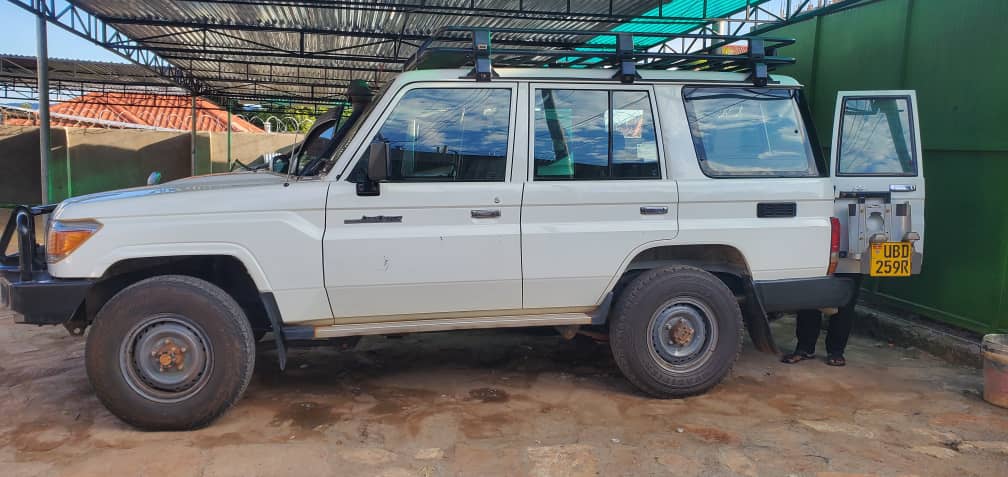
Crossing Borders with a Rental Car in East Africa: What Every Traveller Should Know
East Africa rewards travellers who venture beyond a single country. A safari can flow naturally from Kenya’s savannahs into Tanzania’s Serengeti, Uganda’s forests, or Rwanda’s volcanoes. For independent travellers, a rental vehicle can provide the flexibility to connect these destinations on one memorable road trip.
However, driving a rented vehicle across an international border is not as simple as reaching a checkpoint and continuing into the next country. Cross-border travel requires advance planning, the correct documentation, appropriate insurance, and a clear understanding of rules that can vary between countries and rental companies.
This guide explains what travellers should know when planning a cross-border self-drive adventure through Kenya, Tanzania, Uganda, and Rwanda.
Understanding Cross-Border Car Rental in East Africa
East Africa is one of Africa’s most rewarding regions for overland travel. Neighbouring countries are connected by established road networks, and it is possible to combine several destinations into one journey.
However, cross-border travel is never automatically included with a rental car.
Even if a rental company normally allows international travel, you must receive formal authorization before taking the vehicle across a border. The rental company needs to ensure that the vehicle’s insurance, registration documents, permits, and other paperwork are valid in every country on your itinerary.
Cross-border arrangements may be possible between:
- Tanzania and Kenya
- Kenya and Uganda
- Uganda and Rwanda
- Kenya and Rwanda
- Tanzania and Uganda
- Tanzania and Rwanda
The exact conditions vary considerably between rental companies and routes. Some operators may also permit travel to Burundi, Zambia, Zimbabwe, Malawi, or South Africa, subject to additional approvals and documentation.
Security conditions, insurance restrictions, vehicle ownership, border requirements, and the company’s own operating area can all affect whether a particular route is permitted.
Always confirm your complete itinerary with the rental company before making a booking.
Authorization Comes First
The first and most important step is contacting your rental company.
A booking does not automatically give you permission to cross an international border. The authorization should be confirmed in writing and reflected in your rental agreement or supporting documentation.
When requesting a cross-border rental, provide:
- The countries you intend to visit
- Your planned travel dates
- The border crossings you intend to use
- Your approximate route
- The vehicle you want to rent
- The number of drivers
- Your planned drop-off location
- Whether you will return the vehicle to the original country
- Whether you require a one-way rental
This information allows the rental company to determine whether the vehicle can legally and practically be used for the proposed journey.
An experienced regional rental operator should also be able to advise you about border procedures, insurance requirements, temporary vehicle-entry arrangements, and any restrictions affecting national parks or particular routes.
The COMESA Yellow Card and Cross-Border Insurance
Insurance is one of the most important issues to clarify before crossing a border.
The COMESA Yellow Card is a regional motor vehicle insurance scheme designed to provide third-party liability coverage for vehicles travelling between participating countries in Eastern and Southern Africa.
It is broadly comparable to the Green Card system used in parts of Europe.
The Yellow Card system can facilitate cross-border travel in participating countries, but travellers should not assume that simply having a rental vehicle means the required cover is automatically included.
Before departure, ask your rental company:
- Is cross-border insurance included?
- Is a COMESA Yellow Card required for my route?
- Will the rental company provide it?
- Is there an additional insurance charge?
- Does the insurance cover every country on my itinerary?
- Are there exclusions for national parks or particular routes?
Do not leave this until the day you cross the border. Insurance documentation should be arranged in advance so that you are not delayed at a border post.
Border Procedures: Fees, Permits and Paperwork
Crossing an international border with a rental vehicle involves more than immigration control.
You may encounter:
- Immigration procedures
- Customs clearance
- Temporary vehicle-import documentation
- Third-party insurance requirements
- Cross-border authorization fees
- Road-user or vehicle-entry charges
- Port or border processing fees
- Vehicle inspection
- Rental-company documentation checks
The exact requirements depend on the countries involved and the specific border crossing.
A cross-border fee charged by a rental company is normally separate from government border charges. It may cover administration, insurance extensions, documentation, and the company’s additional costs associated with allowing the vehicle outside its normal operating country.
A one-way fee may also apply if you collect the vehicle in one country and return it in another.
For example, a journey beginning in Nairobi and ending in Arusha is operationally more complicated than a vehicle that returns to Nairobi. The rental company must arrange the vehicle’s return, documentation, insurance, and potentially a driver or transport movement.
Documents You Should Carry
Travellers should carry original documents wherever possible.
Depending on the countries and rental arrangement, you may need:
- A valid passport
- A valid driving licence
- International Driving Permit, where required
- Vehicle registration documents
- Rental agreement
- Written cross-border authorization
- Insurance documentation
- COMESA Yellow Card, where applicable
- Temporary importation or customs documentation
- Copies of relevant company documents
- Emergency contact details for the rental company
Keep both physical and digital copies of important documents.
Do not rely exclusively on your phone. Remote border posts and rural areas may have unreliable internet connectivity or limited access to electricity.
Driving-Side Differences Matter
One of the most important things to remember when travelling across East Africa is that countries do not all drive on the same side of the road.
- Kenya: left-hand traffic
- Tanzania: left-hand traffic
- Uganda: left-hand traffic
- Rwanda: right-hand traffic
- Burundi: right-hand traffic
This becomes particularly important when crossing from Uganda or Tanzania into Rwanda.
Take extra care at the border immediately after entering a country where the driving side changes. Your instincts from the previous country can easily become automatic, particularly after a long day of driving.
Speed limits, road signs, traffic enforcement, toll systems, road conditions, and driving customs can also vary between countries.
National Parks Can Have Additional Restrictions
Cross-border vehicle authorization does not necessarily mean that the vehicle can enter every national park along your route.
This is particularly important for safari itineraries involving Kenya and Tanzania.
National parks and conservation areas may have specific rules concerning:
- Vehicle registration
- Foreign-registered vehicles
- Park entry permits
- Vehicle fees
- Insurance
- Authorized entry gates
- Driver requirements
- Cross-border vehicle movement
For example, a vehicle that is perfectly legal to drive on Tanzanian public roads may not automatically be permitted to enter every protected area under the same conditions.
Therefore, check both the national border requirements and the park-entry requirements before finalizing your route.
Never assume that because you can cross the border, you can automatically take the rental vehicle into every national park.
Choosing the Right Rental Vehicle
The right vehicle can make a major difference to a cross-border road trip.
If your itinerary is primarily on paved highways between major cities, a standard SUV may be sufficient. However, travellers planning to visit national parks, remote areas, or rural destinations should consider a properly equipped 4×4.
Popular choices for East African self-drive include:
- Toyota Land Cruiser Prado
- Toyota Land Cruiser
- Toyota Land Cruiser V8
- Toyota Hilux
- Nissan Patrol
- Other properly equipped 4×4 vehicles
For safari travel, important features include:
- High ground clearance
- Reliable 4WD system
- Good-quality tyres
- Full-size spare wheel
- Recovery equipment
- Adequate luggage space
- Long-range fuel capacity
- Reliable suspension
- Communication or emergency-support arrangements
If camping, you may also require a rooftop tent, refrigerator, camping table, chairs, cooking equipment, sleeping bags, and other safari equipment.
Before departure, inspect the vehicle carefully with the rental representative.
Check:
- Tyres
- Spare wheel
- Jack and wheel tools
- Lights
- Windscreen
- Bodywork
- Engine fluids
- 4WD system
- Recovery equipment
- Camping equipment, if provided
Take photographs or video of the vehicle before departure and make sure existing damage is recorded on the rental agreement.
Plan Your Fuel Stops Carefully
Fuel availability becomes increasingly limited as you leave major towns and enter remote safari areas.
Do not wait until the fuel gauge is nearly empty.
A good rule is to refuel whenever you reach a reliable fuel station in a major town, particularly before entering long remote stretches.
Carry enough fuel for your planned route and maintain a sensible reserve where permitted and appropriate.
This is especially important for journeys involving remote parts of:
- Serengeti
- Northern Tanzania
- Western Tanzania
- Northern Kenya
- Uganda’s national parks
- Rwanda’s rural areas
Your rental company should be able to advise you about fuel availability along your specific route.
Road Conditions Can Change Quickly
Main highways linking East African cities are generally much easier to drive than remote safari roads.
Once you leave the main highways, conditions can change dramatically.
Expect:
- Gravel roads
- Corrugated surfaces
- Deep potholes
- Mud
- Dust
- Rocky tracks
- Narrow bridges
- Seasonal flooding
- Steep sections
- Poorly marked junctions
- Wildlife and livestock on the road
Rain can transform a road that is manageable in dry conditions into a difficult or sometimes impassable route.
Before setting out each morning, check local road conditions and ask your accommodation or rental company about the condition of the road ahead.
Avoid Driving at Night
Night driving is best avoided on rural East African roads.
Hazards can include:
- Pedestrians
- Livestock
- Cyclists
- Motorcycles
- Poorly marked vehicles
- Potholes
- Wildlife
- Unmarked speed bumps
- Limited road lighting
In remote safari areas, the situation can be even more challenging.
Plan your daily driving so that you reach your accommodation or campsite well before darkness.
For long-distance travel, starting early is usually much better than trying to cover the final kilometres after sunset.
Navigation and Internet Connectivity
Do not assume that mobile internet will work everywhere.
Remote safari areas can have limited or no connectivity.
Before leaving a town, download:
- Offline maps
- Your accommodation locations
- Border crossing information
- Important phone numbers
- Your rental company’s emergency contact
- Park information
- Your planned route
A physical map can also be useful as a backup.
GPS navigation is particularly valuable on remote safari tracks, but always remember that mapped roads can change and some tracks shown on digital maps may not be suitable for your vehicle.
Allow Extra Time at Borders
A cross-border journey should never be planned with a tight schedule.
Border procedures can take longer than expected because of:
- Immigration queues
- Customs inspections
- Vehicle documentation
- Insurance verification
- Temporary import procedures
- System downtime
- Vehicle inspections
- High tourist traffic
Allow several hours where appropriate and avoid scheduling an important flight immediately after a land-border crossing.
If your itinerary involves multiple borders, build flexibility into the entire journey.
One-Way Cross-Border Rentals
One-way international rentals are possible in some circumstances but are considerably more complicated than returning a vehicle to its original location.
For example:
Nairobi → Arusha
or
Kigali → Kampala
may require the rental company to arrange:
- Cross-border authorization
- Insurance
- Vehicle documentation
- Local representation
- Vehicle recovery or return logistics
- Driver or transport costs
Consequently, international one-way rentals usually cost more than standard rentals.
Always ask for the complete one-way price, including cross-border charges, before confirming your booking.
What About Driving a Kenyan Vehicle in Tanzania?
This is an important consideration for travellers planning a Kenya–Tanzania safari.
A vehicle can potentially cross the border, but border permission and national-park access are separate issues.
Certain Tanzanian protected areas can have specific requirements concerning foreign-registered vehicles, and rules can change.
If your itinerary includes the Serengeti, Ngorongoro Conservation Area, Tarangire, or other Tanzanian parks, confirm the vehicle’s eligibility with your rental company and the relevant authorities before departure.
The same principle applies when taking a Tanzanian-registered rental vehicle into Kenya.
Never assume that a vehicle approved for ordinary road travel is automatically approved for safari operations in every country.
Is an International Driving Permit Required?
Requirements can differ according to nationality, licence type, and country.
Travellers should therefore check the current requirements for every country on their itinerary before departure.
Even where your national driving licence may be accepted, an International Driving Permit can be useful when dealing with police checks, border officials, rental companies, or authorities who are unfamiliar with your licence format.
Your IDP should be carried together with your original driving licence. It is not a replacement for your national licence.
Cross-Border Travel Checklist
Before leaving, make sure you have:
- Written permission from the rental company
- A rental agreement permitting international travel
- Valid passport
- Valid driving licence
- International Driving Permit where applicable
- Vehicle registration documents
- Valid insurance
- COMESA Yellow Card where applicable
- Temporary vehicle-entry documentation where required
- Border-crossing fees
- Park permits and fees where required
- Emergency contact details
- Offline navigation
- Sufficient fuel
- Spare tyre and recovery equipment
- Copies of important documents
Book Cross-Border Rentals Early
Cross-border rentals require more preparation than ordinary car hire.
Rental companies may need time to:
- Confirm insurance
- Prepare authorization letters
- Verify vehicle eligibility
- Arrange temporary importation documents
- Coordinate with offices in another country
- Confirm park access
- Arrange one-way vehicle logistics
For this reason, do not wait until the last few days before your trip.
The earlier you provide your complete itinerary, the easier it is for the rental company to identify potential problems and recommend alternatives.
Final Thoughts
A cross-border road trip through East Africa can be an extraordinary adventure. One journey can combine Kenya’s wildlife-rich savannahs, Tanzania’s legendary Serengeti, Uganda’s spectacular landscapes, and Rwanda’s mountain scenery.
But successful cross-border self-drive requires more than simply renting a 4×4 and following the road to the next country.
Get authorization in advance, confirm insurance requirements, prepare your vehicle documents, understand border procedures, check national-park restrictions, and plan carefully for fuel, roads, navigation, and changing driving conditions.
Most importantly, communicate your entire itinerary to the rental company before booking. A professional operator can tell you whether the vehicle, route, border crossings, insurance, and planned drop-off are all workable.
With the right preparation, travelling across East Africa by rental car can give you an exceptional level of freedom while allowing you to experience several countries on one unforgettable road trip.